
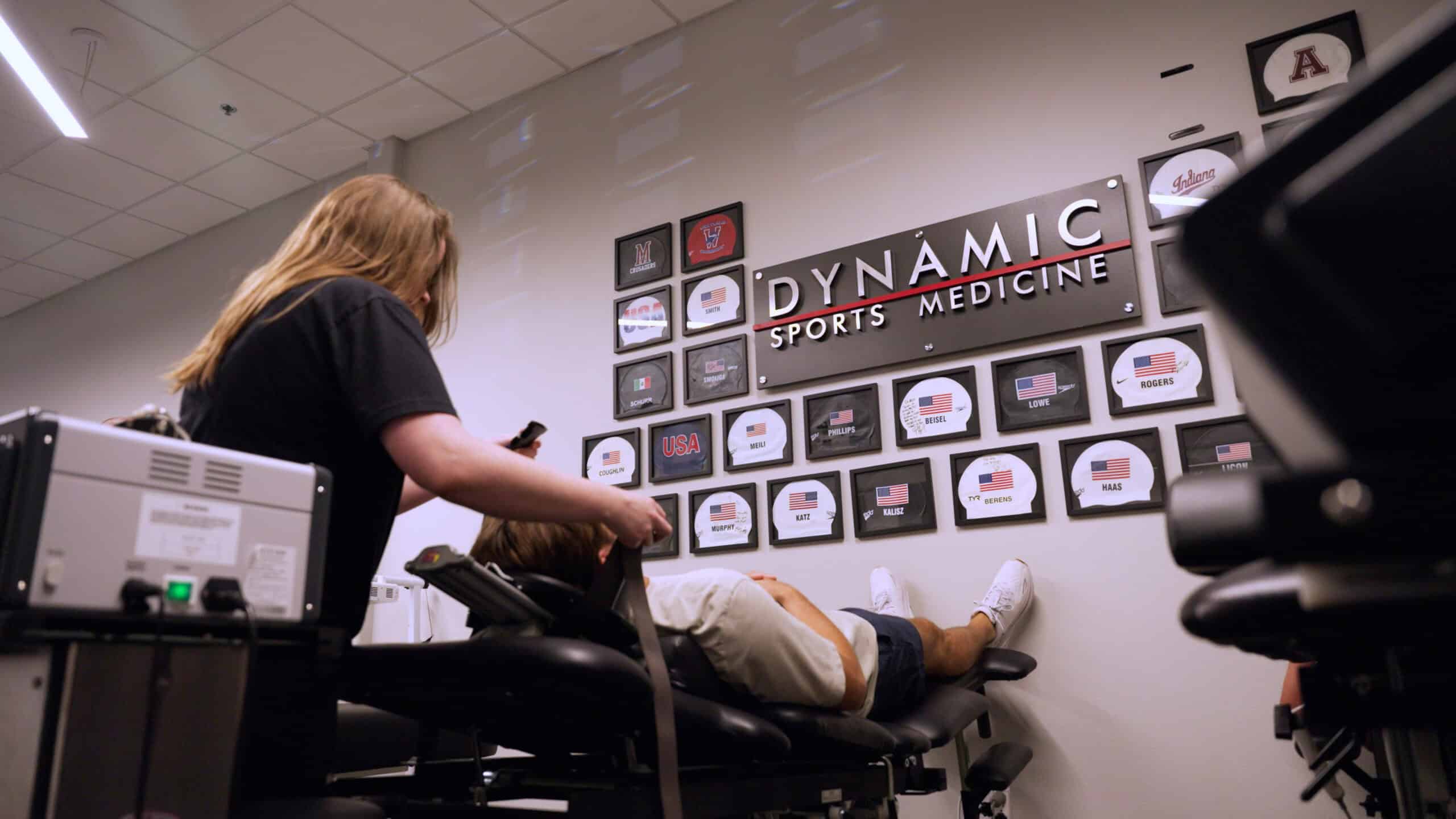

Medical professional performing a sports injury assessment on a patient in a modern clinic setting.
Sports Performance

How to Find the Right Sports Chiropractor Near You

Dr. Matt Lowe, DC CCSP® By Dr. Matt Lowe, DC CCSP® ·

How to Find the Right Sports Chiropractor Near You (What Athletes Should Look For)

If you’re searching for a sports chiropractor near you, it’s likely because something is limiting your training.

Maybe your knee tightens every time mileage increases.
Maybe your shoulder flares during pressing or throwing.
Maybe your back stiffens after heavy lifts.

You are not looking for general wellness care.
You are looking for a provider who understands training load, movement mechanics, recovery timelines, and performance goals.

The difference between general chiropractic care and sports-focused chiropractic care is not philosophy. It is framework.

Athletes require movement assessment, load management, and performance integration.
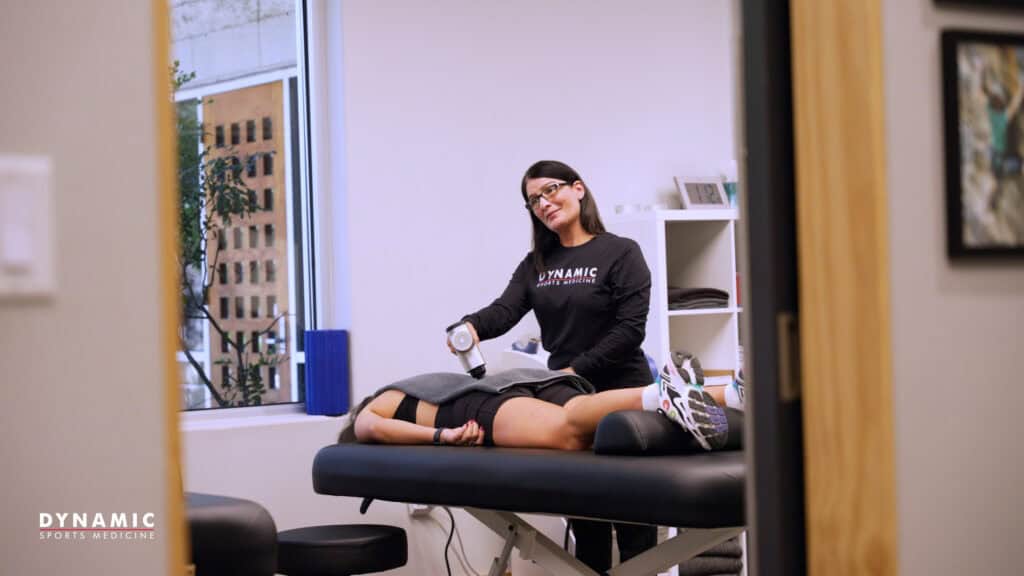
Professional sports medicine therapy for injury recovery and pain management, using advanced techniques for optimal athlete health.

What Does a Sports Chiropractor Actually Do?

A sports chiropractor evaluates and treats issues through a performance lens.

Instead of focusing only on where pain is felt, they assess:

  • Joint mechanics
  • Soft tissue mobility
  • Movement patterns under load
  • Training volume and recovery balance
  • Sport-specific stress patterns

Treatment may include chiropractic adjustments, soft tissue therapy, dry needling, mobility work, corrective exercise, and structured load modification.

The goal is to improve movement efficiency and reduce stress accumulation — not simply relieve symptoms temporarily.

This is especially important for athletes who want to continue training while recovering.

Comprehensive sports medicine clinic specializing in injury prevention, sports rehab, and athletic performance optimization at Dynamic Sports Medicine.

Why Sports-Focused Chiropractic Care Matters

Athletic injuries are rarely isolated events. Most are the result of:

  • Accumulated training load
  • Movement inefficiencies
  • Tissue capacity limitations
  • Poor recovery integration

A sports chiropractor evaluates how your training volume influences recovery and whether movement patterns are increasing stress on specific joints or tissues.

Rather than defaulting to extended rest, treatment is often integrated with training adjustments when possible.

How Sports Chiropractors Approach Load and Tissue Tolerance

The body adapts to stress.

Tissues heal and strengthen through progressive loading — not complete elimination of stress in most cases.

A sports chiropractor understands:

  • When to reduce volume
  • When to modify intensity
  • When to change mechanics
  • When temporary rest is appropriate
  • How to reintroduce load progressively

This framework is essential for runners, lifters, Hyrox competitors, team sport athletes, and active adults training multiple days per week.

Movement Assessment vs. Symptom-Based Care

One of the defining characteristics of a sports chiropractor is movement assessment.

Instead of evaluating only the painful area, they may:

  • Test hip mobility when your knee hurts
  • Assess ankle mechanics when you have hip pain
  • Evaluate thoracic mobility when your shoulder is irritated
  • Watch how you squat, hinge, rotate, or run

Pain is often the result of dysfunction elsewhere in the chain.

Functional movement assessment helps identify what actually needs to change.

A male tennis player experiencing shoulder pain, seeking sports medicine and injury recovery.

Sport-Specific Knowledge Matters

Different sports create different stress patterns.

Context matters when evaluating and treating pain.

  • Runners develop predictable hip, knee, and ankle issues
  • Throwing athletes develop shoulder stress patterns
  • Cyclists experience hip and lower back stiffness
  • Contact athletes manage collision-related injuries
  • Hyrox and functional fitness athletes experience fatigue-driven breakdowns

Questions to Ask Before Choosing a Sports Chiropractor

If you’re evaluating providers after searching “sports chiropractor near me,” ask:

  • How do you integrate treatment with training?
  • Do you perform movement-based assessments?
  • Do you have experience with my sport?
  • What sports-specific certifications or training have you completed?
  • How do you track progress and modify the plan?

The answers will reveal whether the provider approaches care through a performance framework.

What to Look For in a Sports Chiropractor Near You

Experience With Active Populations
Ideally, your provider regularly treats athletes or active adults.
Ask:

  • How many runners do you see?
  • Do you work with weightlifters?
  • Have you treated athletes in my sport?
  • Experience with similar demands improves clinical decision-making.

Clear Timeline Expectations
A sports chiropractor should provide:

  • A working diagnosis
  • A plan
  • An estimated improvement timeline
  • Clear benchmarks for progress

If improvement is not seen within a reasonable timeframe (often 2–3 weeks for many conditions), the plan should be adjusted.

Integrated Approach
Sports chiropractic care may include:

  • Adjustments
  • Soft tissue therapy
  • Mobility work
  • Corrective exercise
  • Load management strategies

No single tool fixes everything. A comprehensive approach usually produces better outcomes.

Accessibility and Consistency
Because recovery often requires multiple visits, choosing a sports chiropractor near you improves adherence and consistency.
Proximity matters when building momentum.

Sports Chiropractor vs Physical Therapist: Which Is Right?

Both can be valuable for athletes.

Physical therapists often focus heavily on rehabilitation, strength development, and movement retraining.

Sports chiropractors often emphasize joint mechanics, tissue mobilization, and integration with ongoing training.

Many athletes benefit from collaboration between both disciplines.

The most important factor is whether the provider understands athletic demands and integrates care with performance goals.

What to Expect in Your First Appointment

1. Detailed History
Training volume, sport demands, injury history, goals, and timeline.

2. Movement Assessment
Functional testing to identify restrictions, asymmetries, and compensation patterns.

3. Clear Explanation
An understandable breakdown of what is contributing to symptoms.

4. Structured Plan
A roadmap that outlines:
Treatment frequency
Expected timeline
Training modifications if needed
When to reassess

You should leave knowing what the issue is and what the next steps are.

Common Questions About Sports Chiropractors

In many cases, no. Training may be modified, but full rest is not always necessary.

Frequency depends on the condition. Acute issues may require more frequent visits initially.

Yes. Many athletes use it proactively during high training periods.

Often no. A movement-based evaluation determines if imaging is needed.

Looking for a Sports Chiropractor Near You?

If you are training consistently and want care structured around performance — not just temporary symptom relief — consider scheduling a movement-based evaluation with a sports-focused provider.

Schedule Your Evaluation
Aetna Humana Blue Cross Blue Shield Ambetter Cigna UnitedHealthcare Oscar Health Superior HealthPlan Sana Benefits Baylor Scott & White