
Rotator Cuff Injury
Conservative treatment for rotator cuff strains, tears, and tendinitis
Understanding Rotator Cuff Injury
The rotator cuff is a group of four muscles and tendons that stabilize the shoulder joint and allow you to lift and rotate your arm. Injuries range from mild tendinitis and strains to partial or full-thickness tears, and they’re among the most common shoulder problems we see at DSM.
Many rotator cuff injuries — including partial tears — respond well to conservative treatment. Our providers combine manual therapy, shockwave therapy, and progressive rehabilitation to restore shoulder function without surgery.
Symptoms
- Pain at the top or outside of the shoulder
- Pain when reaching overhead or behind the back
- Weakness when lifting or rotating the arm
- Night pain, especially when lying on the affected side
- A crackling sensation with shoulder movement
- Difficulty performing daily tasks like reaching, dressing, or combing hair
Common Causes
Repetitive Overhead Use
Throwing, swimming, tennis, and overhead work create cumulative stress on the rotator cuff tendons, leading to tendinitis and degeneration.
Acute Injury or Fall
A fall on an outstretched arm, sudden forceful movement, or direct impact can strain or tear the rotator cuff.
Age-Related Degeneration
Rotator cuff tendons naturally weaken with age, making them more susceptible to tears from everyday activities.
Muscle Imbalances
Weakness in the rotator cuff relative to the larger shoulder muscles (deltoid, pec) creates abnormal mechanics that stress the tendons.
When to Seek Treatment
Seek evaluation if shoulder pain persists beyond a few days, if you notice progressive weakness, or if the pain interferes with sleep or daily activities. Early treatment of rotator cuff injuries significantly improves outcomes and may prevent the need for surgery.
Treatment Options
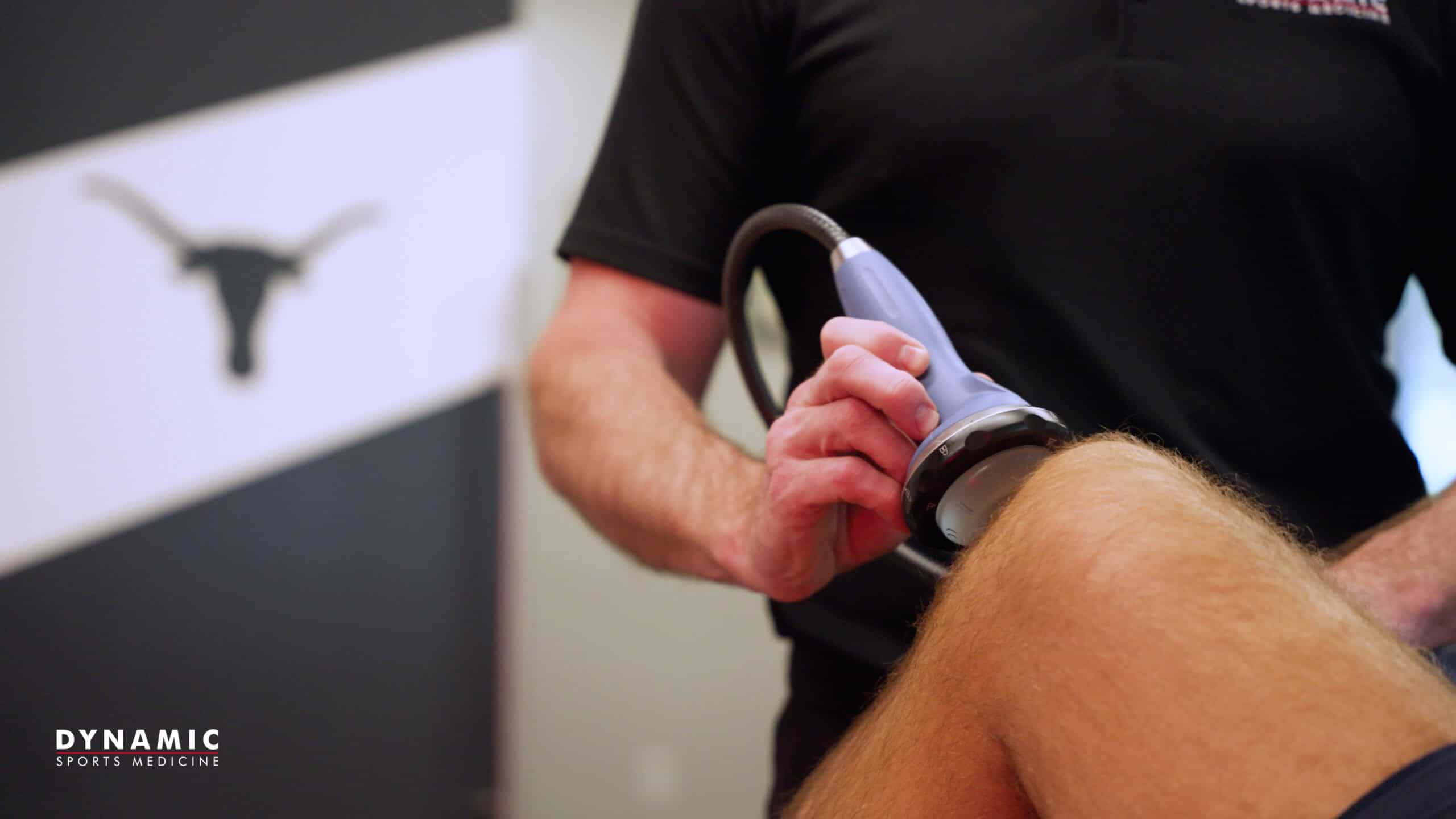
Shockwave Therapy (MYACT)
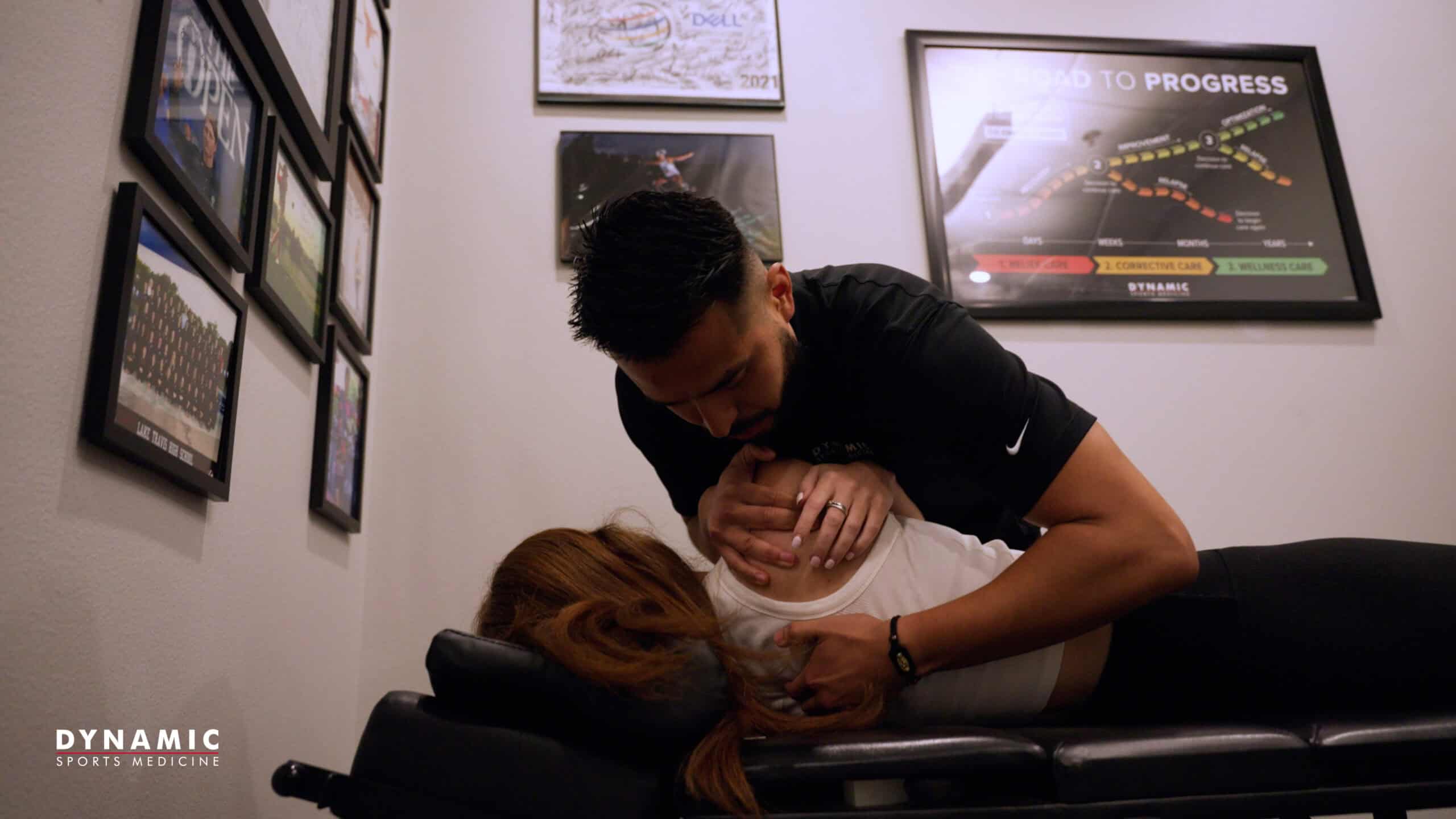
Chiropractic Shoulder Adjustment
Active Release Technique (ART)
Progressive Rehabilitation
Recovery & Rehabilitation
Rotator cuff tendinitis typically improves within 4-8 weeks. Partial tears may require 8-16 weeks of rehabilitation. Your DSM provider will monitor your progress and adjust your treatment plan as the tendon heals, with the goal of full return to activity and sport.
Frequently Asked Questions
No. Many partial-thickness rotator cuff tears and some full-thickness tears respond well to conservative treatment. Research shows that physical rehabilitation achieves comparable outcomes to surgery for many rotator cuff tear patients.
Recovery depends on severity. Mild tendinitis may resolve in 4-6 weeks. Partial tears typically require 8-16 weeks of rehabilitation. Your DSM provider will set realistic timelines based on your specific injury.
Related Services
Ready to Get Relief?
Schedule your appointment with our specialists to discuss your treatment options.
Book Now