

Plantar fasciitis can linger for months or even longer. Many people experience sharp heel pain during those first steps out of bed, easing somewhat by mid-day, only to return again. If you’ve rested, stretched your calves, or tried insoles, yet your plantar fasciitis won’t go away, you’re not alone.
Why Morning Pain Is Common
Morning heel pain isn’t random. Overnight, your foot rests in a position that allows the plantar fascia to shorten. When you suddenly stand, you’re loading this sensitized tissue, causing pain. The same pattern occurs after prolonged sitting. While walking may reduce discomfort, feeling better as the day progresses doesn’t mean the condition is resolving.
Why Plantar Fasciitis Persists
Plantar fasciitis lingers for several reasons. Complete rest is impractical since walking is unavoidable. Furthermore, excessive rest can weaken the fascia, reducing its capacity when normal activity resumes. Additionally, the plantar fascia has a limited blood supply, meaning healing is slow. The cycle often looks like this: pain leads to reduced activity, which weakens the fascia further, resulting in pain when activity resumes.
Limitations of Common Treatments
Rest, on its own, may reduce symptoms temporarily but doesn’t build capacity. Stretching can help flexibility but won’t strengthen the fascia. Orthotics reduce load but don’t address the underlying issue. Night splints can reduce morning pain but also don’t rebuild capacity. While these can be helpful adjuncts, they often need to be paired with strengthening strategies.
What Actually Works
The most effective approach is progressive loading, gradually increasing the plantar fascia’s strength. Our approach is: first, calm the sensitivity with temporary load adjustments (not full rest); second, introduce controlled strengthening exercises, such as calf raises with a rolled towel; and third, address contributing factors like calf tightness or training errors. Research shows that strengthening yields better long-term outcomes than stretching alone. With
consistent progressive loading, most people see improvement in 8–12 weeks.
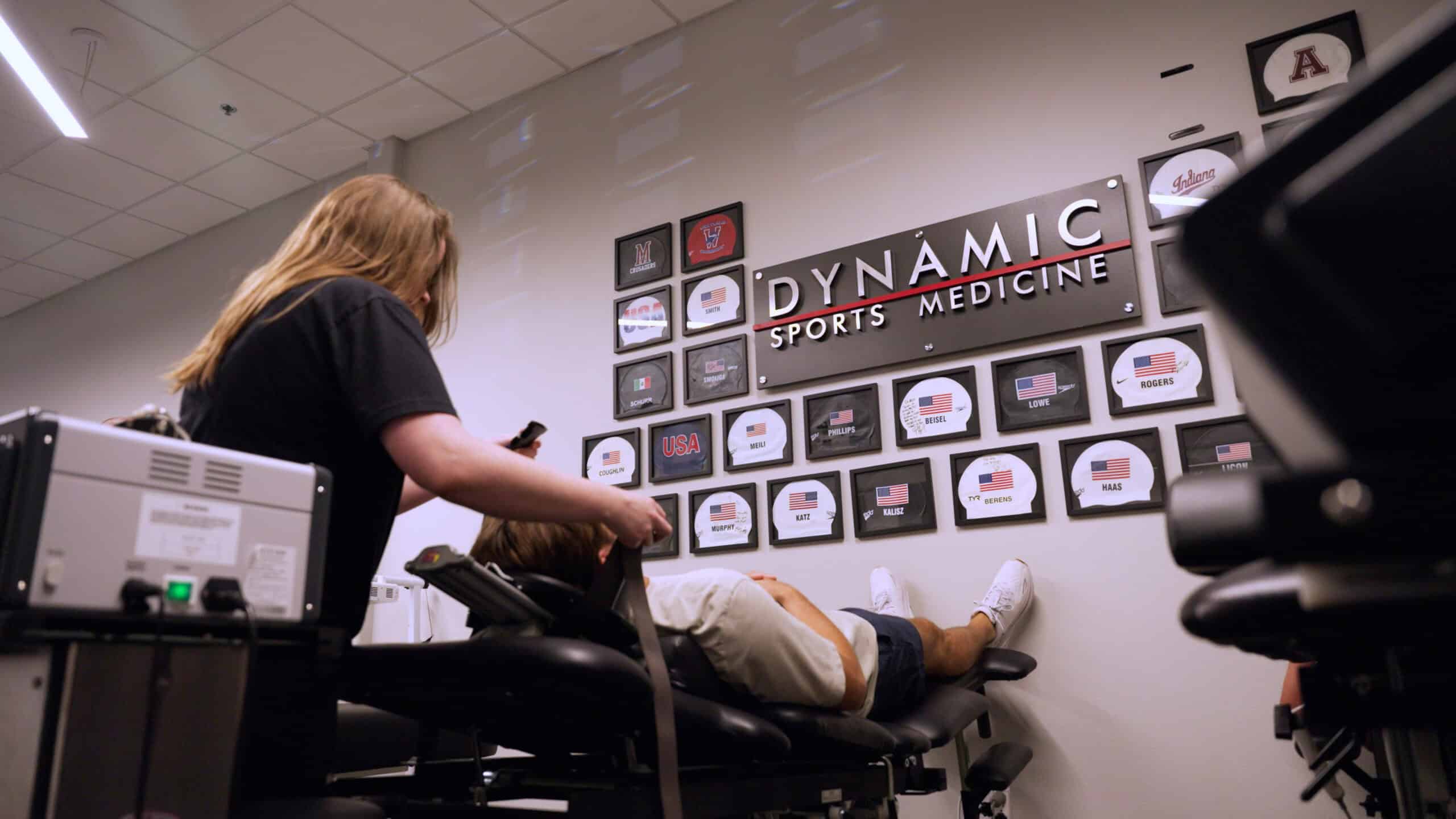
At Dynamic Sports Medicine, we go beyond standard loading exercises. Our advanced approach may incorporate modalities like myofascial release, active release techniques, shockwave therapy, dry needling, and red light therapy—tailored to each patient. These tools help manage pain, reduce sensitivity, and support the tissue’s healing as we progressively rebuild strength.