
Ankle Sprain Treatment
Expert Ankle Sprain Care in Austin, Dallas & Houston
Understanding Ankle Sprain Treatment
An ankle sprain occurs when one or more of the ligaments supporting the ankle are stretched or torn. Ligaments are the structures that connect bone to bone and help stabilize the joint during movement.
The most common type is a lateral ankle sprain, which happens when the foot rolls inward and overstretches the ligaments on the outside of the ankle.
The three most commonly involved lateral ankle ligaments are:
Anterior talofibular ligament (ATFL) — the most commonly injured
Calcaneofibular ligament (CFL) — often involved in more moderate or severe sprains
Posterior talofibular ligament (PTFL) — less commonly injured
Other types of ankle sprains include:
Medial ankle sprains, which affect the ligaments on the inside of the ankle
High ankle sprains, which involve the ligaments above the ankle joint and typically take longer to heal

Symptoms
Symptoms vary depending on the severity of the injury, but common signs include:
Immediate pain after rolling the ankle
Swelling around the ankle joint
Bruising that develops over hours or days
Tenderness along the ligaments
Difficulty bearing weight
Limited range of motion
A feeling of looseness or instability in the ankle
If swelling is severe, walking is difficult, or the ankle feels unstable, professional evaluation is recommended.
Common Causes
Contributing Factors
Ankle sprains often happen during sports and fast directional movements, but they can also occur during everyday activity. Common causes include: Landing awkwardly from a jump Cutting or changing direction quickly Stepping on another player’s foot Rolling the ankle on uneven ground Missing a curb or stepping awkwardly Several factors can increase the risk of ankle sprains: Previous ankle sprain Weakness in the ankle stabilizers Poor balance or proprioception Fatigue during training or competition Inadequate warm-up Poor footwear for the activity A previous ankle sprain is one of the biggest predictors of another sprain, especially when the original injury was never fully rehabilitated.
When to Seek Treatment
You should be evaluated if:
You cannot comfortably bear weight
Swelling and pain are significant
Symptoms are not improving after 48–72 hours
You heard or felt a pop during the injury
You have sprained the same ankle before
Your ankle feels unstable when walking or turning
You want to return to sport safely and avoid re-injury
Early treatment can help prevent a simple sprain from turning into chronic ankle instability.
Treatment Options
Sports Chiropractic Care
Ankle sprains often leave behind restrictions in the ankle and foot joints, even after the initial pain and swelling improve.
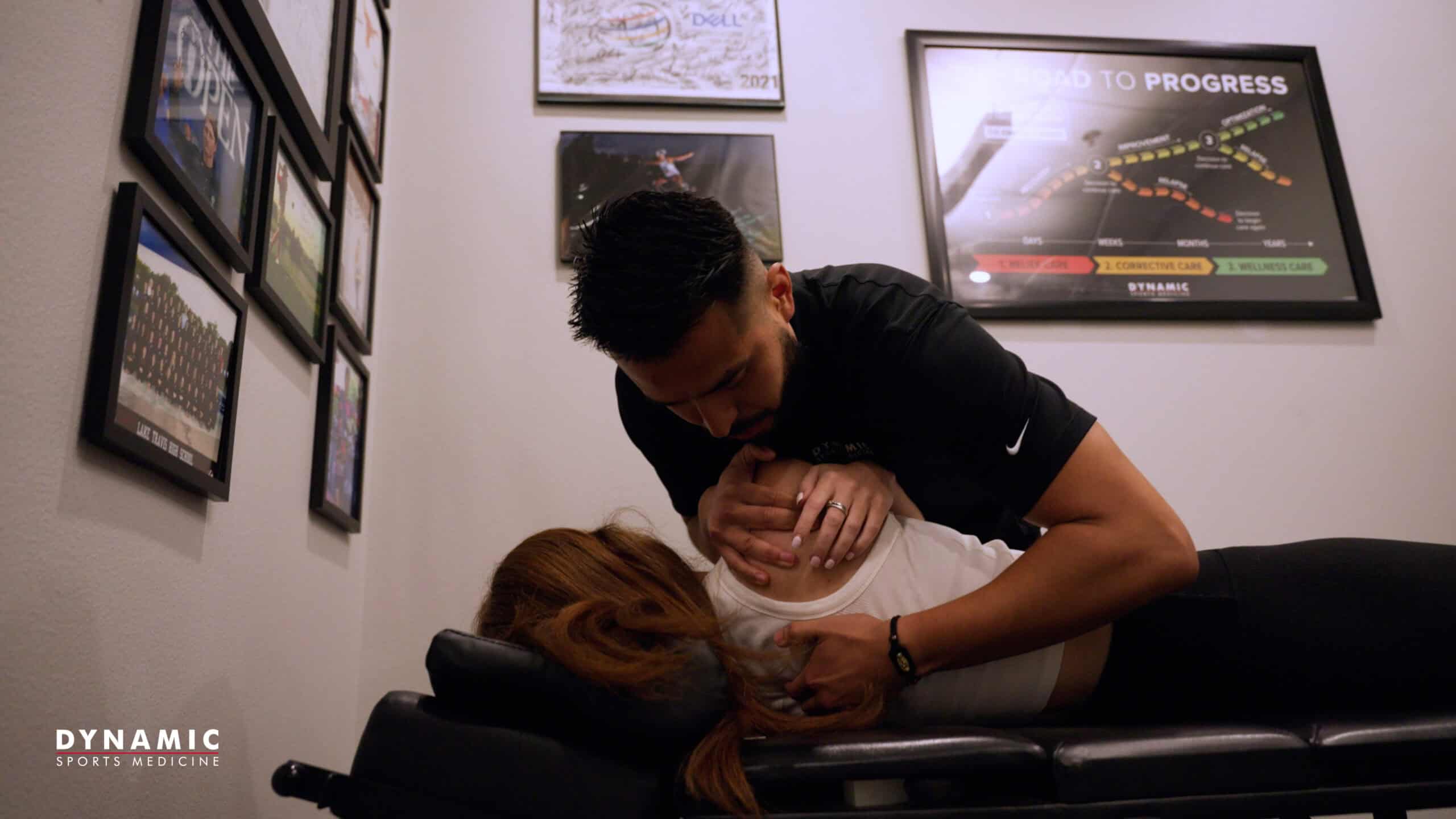
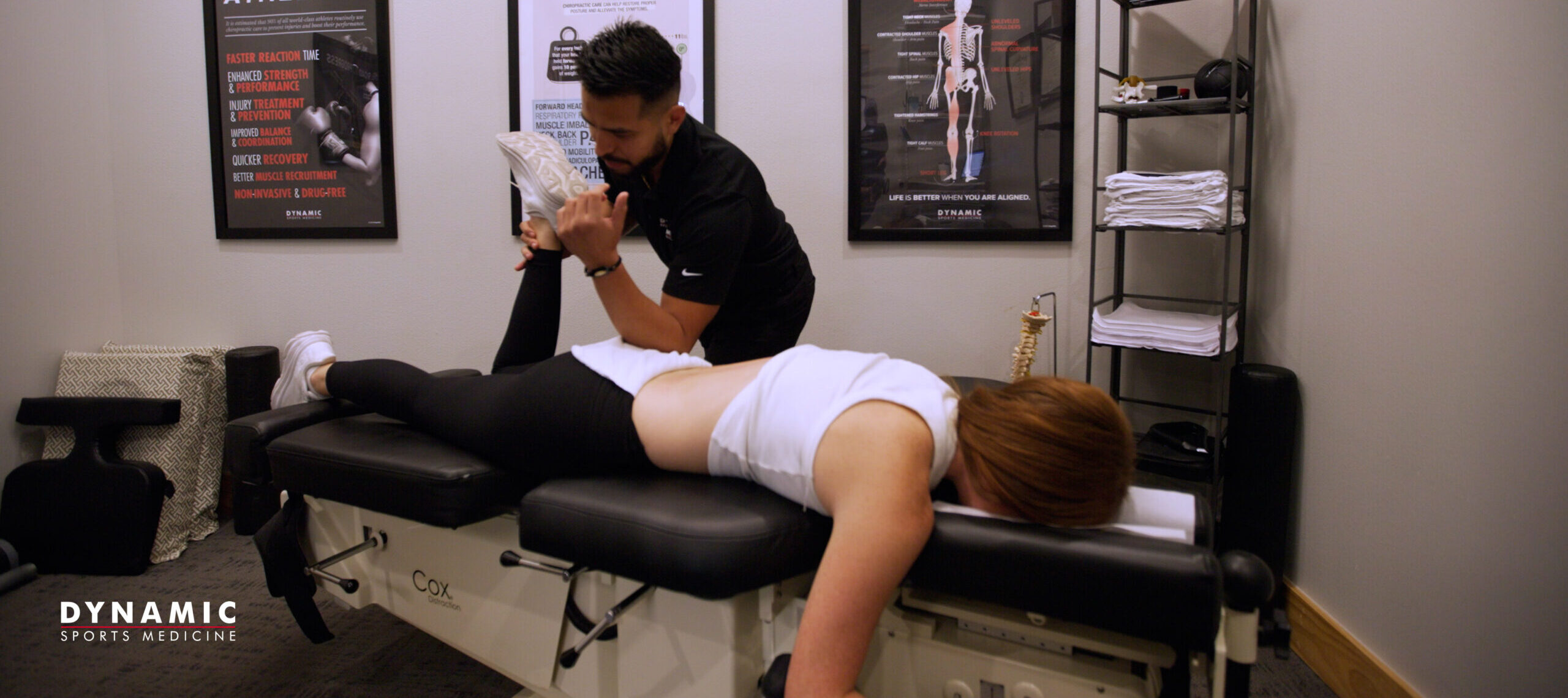
Our sports chiropractors evaluate the ankle, foot, and lower leg mechanics and use targeted treatment to restore mobility, improve movement quality, and reduce compensatory stress throughout the kinetic chain.
Restoring ankle dorsiflexion and normal joint motion is a key part of full recovery.
Dry Needling
After an ankle sprain, the stabilizing muscles around the ankle — especially the peroneals and calf muscles — often become inhibited or tight.
Dry needling helps improve muscle activation, reduce tension, and support better ankle stability during recovery.
Myofascial Release
Soft tissue therapy helps reduce mobility restrictions, improve circulation, and decrease tension in the calf, Achilles, and foot muscles that affect ankle function.
Shockwave Therapy
For chronic ankle sprains or lingering ligament pain that does not fully resolve, shockwave therapy may be used to stimulate healing and reduce pain in the injured tissue.
Recovery Therapies
Additional therapies such as PEMF therapy and NormaTec compression may be used to manage swelling, support tissue healing, and improve recovery between visits.
Recovery & Rehabilitation
A “minor” ankle sprain can quickly become a long-term problem if it is not treated correctly.
At Dynamic Sports Medicine, we help patients recover fully, restore stability, and reduce the risk of repeated ankle injuries.
Book your appointment online or contact your nearest DSM clinic today.
Frequently Asked Questions
Recurrent ankle sprains usually happen because the first injury never fully healed. Residual weakness, joint stiffness, and poor proprioception can leave the ankle vulnerable to repeated injury.
Not every ankle sprain requires imaging. Your provider will determine whether an X-ray is needed based on your symptoms, exam findings, and the likelihood of fracture.
In many cases, yes. Depending on the severity of the sprain, you may still be able to continue certain forms of exercise with modifications. Your provider can guide you on safe activity progression during recovery.
Related Services
Part of our Sports Chiropractic, Performance Recovery and Advanced Sports Therapies services.


Where to Get Treatment for Ankle Sprain Treatment
Every Dynamic Sports Medicine clinic evaluates and treats ankle sprain treatment. Choose the location nearest you to see its providers, hours and directions.
Austin
Dallas-Fort Worth
Ready to Get Relief?
Schedule your appointment with our specialists to discuss your treatment options.
Book Now