
Sports Hernia & Athletic Pubalgia Treatment
Non-Surgical Groin Pain Treatment for Athletes and Active Adults
Understanding Sports Hernia & Athletic Pubalgia Treatment
A sports hernia, also known as athletic pubalgia, is an injury involving the soft tissue structures of the lower abdominal wall, groin, and pubic region.
Unlike a traditional inguinal hernia, there is no protrusion of abdominal contents. Instead, the condition involves strain or tearing of the tissues that attach near the pubic bone, often including:
Lower abdominal muscles
Adductor tendons
Connective tissue around the pubic symphysis
Deep core stabilizers
This area is exposed to high forces during:
Sprinting
Cutting
Twisting
Kicking
Explosive directional changes
When the load on these tissues exceeds their ability to recover, pain and dysfunction develop.
Because groin pain can come from several different structures, sports hernias are often mistaken for:
Adductor strains
Hip flexor injuries
Hip labral tears
Osteitis pubis
Inguinal hernias
This is why an accurate evaluation is so important.
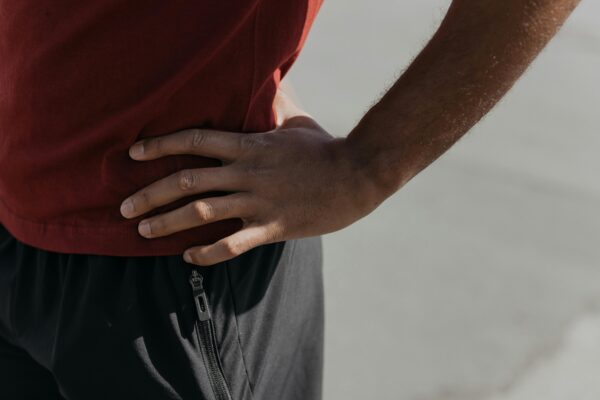
Symptoms
Sports hernia symptoms often build gradually and worsen with activity.
Common signs include:
Deep aching pain in the groin or lower abdomen
Pain near the pubic bone
Pain with sprinting, kicking, cutting, or twisting
Pain that improves with rest but returns during sport
Tenderness at the groin or pubic attachment sites
Pain with resisted sit-ups or hip adduction
A sense of weakness or instability in the groin during explosive movement
Pain that may radiate into the inner thigh or lower abdomen
Many athletes report that they can jog or move lightly, but pain increases significantly when they try to sprint, change direction, or kick at full effort.
Common Causes
High-Demand Sports
Soccer, hockey, football, rugby, lacrosse, sprinting, and sports with aggressive cutting and rotation place high load on the groin and lower abdominal wall.
Muscle Imbalance
When the adductors are stronger than the lower abdominal muscles and deep core stabilizers, the pelvis is exposed to abnormal shearing forces.
Repetitive Twisting and Kicking
Repeated high-force hip rotation and kicking motions increase stress at the pubic attachment sites.
Explosive Acceleration and Deceleration
Fast starts, stops, and directional changes create major force through the groin and pelvis.
Prior Hip or Groin Injury
Previous injuries can alter movement patterns and increase load on the pubic region.
Poor Core Stability
Weakness in the deep core and lumbopelvic stabilizers increases stress on the soft tissues of the groin.
Overtraining
High training volume without adequate recovery allows microtrauma to accumulate and eventually become symptomatic.
When to Seek Treatment
You should consider evaluation if:
Groin pain has lasted more than 2–3 weeks
Pain returns every time you attempt to resume your sport
Symptoms are limiting sprinting, cutting, or kicking
The pain is getting worse over time
Rest, stretching, and anti-inflammatories have not solved the issue
You have been told it is “just a groin strain” but it is not improving
Early treatment often leads to faster recovery and can help prevent the condition from becoming more chronic.
Treatment Options
Sports Chiropractic Care
The lumbar spine, pelvis, sacroiliac joints, and pubic region all influence how force is transferred through the groin.
Our sports chiropractors evaluate the entire lumbopelvic complex and use targeted care to restore normal joint mechanics and reduce the abnormal loading patterns contributing to pain.
Dry Needling
Dry needling can help reduce tension and trigger points in structures such as the:
Adductors
Hip flexors
Lower abdominals
Piriformis
Surrounding pelvic stabilizers
This helps improve movement quality and reduce pain in the groin region.
Shockwave Therapy
Shockwave therapy is especially useful for chronic tendon and attachment-site pain in the groin and pubic region.
It helps stimulate tissue healing, improve blood flow, and support remodeling of chronically overloaded tissues.
Myofascial Release
Soft tissue treatment helps reduce restriction and tension throughout the:
Groin
Hip flexors
Lower abdominal wall
Adductors
Pelvic region
This improves tissue mobility and helps reduce the stress being placed on the injured area.
PEMF Therapy
PEMF therapy may be used to support tissue recovery and help manage inflammation during the healing process.
Rehabilitation and Core Stability Training
Rehabilitation is one of the most important parts of recovery from a sports hernia.
Your program may include:
Deep core activation
Pelvic stability work
Progressive adductor strengthening
Hip mobility and control exercises
Rotational control training
Sprint and cutting progressions
Return-to-sport movement retraining
The goal is not only to reduce pain, but also to rebuild a stronger, more resilient system so symptoms do not return.
Recovery & Rehabilitation
Persistent groin pain should not be ignored, especially if it keeps coming back every time you try to train or compete.
At Dynamic Sports Medicine, we help patients identify the true source of athletic groin pain and build a treatment plan focused on restoring movement, reducing pain, and getting back to sport.
Book your appointment online or contact your nearest DSM clinic today.
Frequently Asked Questions
Yes. Many athletes recover successfully with conservative treatment, especially when the condition is identified early and managed with the right combination of manual therapy, rehabilitation, and load modification.
Many cases improve within 6–12 weeks of consistent treatment and rehabilitation. More chronic or severe cases may take longer depending on how long symptoms have been present and the demands of the athlete’s sport.
A traditional hernia involves abdominal tissue pushing through a weak spot in the abdominal wall, often creating a visible bulge. A sports hernia involves strain or tearing of the soft tissues in the groin and lower abdominal region without that protrusion.
Ready to Get Relief?
Schedule your appointment with our specialists to discuss your treatment options.
Book Now