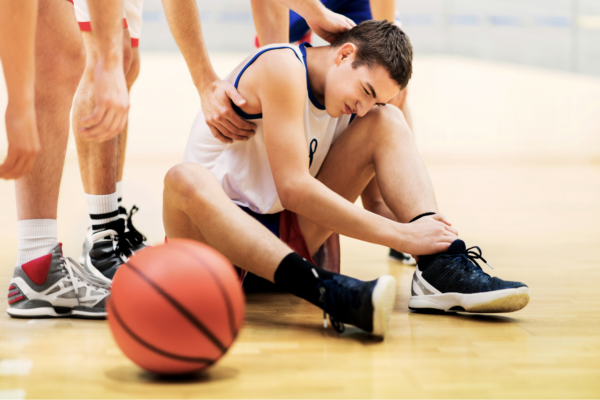

An ACL injury is one of the most psychologically difficult things that can happen to an athlete. The diagnosis comes with a number, usually somewhere between six and twelve months, and that number tends to become the thing you fixate on. But recovery from ACL surgery isn’t about watching a clock. It’s about meeting a set of biological and functional criteria that tell you your knee is actually ready.
This post covers what ACL recovery actually looks like, what determines the pace of that recovery, and how sports medicine support fits into the process.
Understanding the ACL and Why It Takes So Long
The anterior cruciate ligament is the primary restraint against anterior tibial displacement in the knee. When it ruptures, either partially or completely, the knee loses that stability and compensatory muscular guarding takes over. Most complete ACL ruptures require surgical reconstruction, typically using a graft taken from the patellar tendon, hamstring, or a donor source.
The reason recovery takes months rather than weeks is ligamentization: the process by which the graft transforms into functioning ligament tissue. This is a biological process, not just a structural one, and it has its own timeline regardless of how good you feel or how fast your pain resolves. The graft is actually at its weakest around six to eight weeks post-surgery, a phase often called “ligamentization trough,” which is why return-to-sport decisions based on pain alone are dangerous.

The Phases of ACL Recovery
Early phase (weeks 1 to 6): the focus is on managing swelling, restoring full extension, and beginning quad activation. The quad tends to shut down after ACL injury and surgery, and getting it firing again is the primary early objective. Achieving full passive extension early is critical because losing terminal extension is one of the most common and problematic complications.
Middle phase (weeks 6 to 16): progressive strength work begins in earnest. Quad strength relative to the uninjured side is the key metric, targeting at least 70% limb symmetry before higher-load activities are introduced. Neuromuscular control and landing mechanics are also trained during this phase.
Advanced phase (months 4 to 7): sport-specific movement is introduced. Running, cutting, jumping progressions. This is where most athletes feel “fine” but where the graft is still maturing. Criteria-based clearance rather than time-based clearance is the evidence-supported standard here.
Return-to-sport phase (months 7 to 12): full return to competition typically happens somewhere in this window, provided strength symmetry, hop tests, and psychological readiness criteria are all met. Athletes who return before meeting these benchmarks have significantly higher reinjury rates.
What Sports Medicine Support Does for ACL Recovery
Post-surgical rehab through a physical therapist is standard. What sports medicine chiropractic adds is complementary, not redundant.
Joint mobility and compensation management: after ACL surgery, the hip, ankle, and lumbar spine often develop restrictions or compensatory patterns as they adapt to altered knee mechanics. Chiropractic adjustments address these throughout recovery, preventing secondary problems from derailing the primary process.
Soft tissue work with Active Release Technique: the quad, hamstrings, and IT band all undergo significant changes post-surgery. ART keeps the tissue quality and mobility where it needs to be as loading increases through the phases.
Dry needling: quad inhibition is a real and persistent problem after ACL injury. Dry needling the VMO and quad complex can accelerate the reactivation process when exercise alone isn’t getting there fast enough.
PEMF therapy: for patients with persistent swelling or who have had significant bone bruising at the time of injury, PEMF supports the inflammatory and healing process in ways that accelerate tissue recovery.
The goal of sports medicine support during ACL recovery is to optimize the tissue environment and movement quality so the formal rehab program can work as effectively as possible.
What Actually Determines Your Timeline
Graft type matters somewhat, with patellar tendon grafts typically showing faster early strength development. Age and baseline fitness affect recovery speed. Post-surgical complications like stiffness, infection, or graft failure obviously affect the timeline. But the two biggest factors are typically quad strength symmetry and neuromuscular readiness.
Research consistently shows that psychological readiness is also a legitimate gating criterion. Athletes who return to sport before they feel genuinely confident in their knee have higher reinjury rates regardless of physical testing outcomes. This is a real factor that deserves attention, not dismissal.