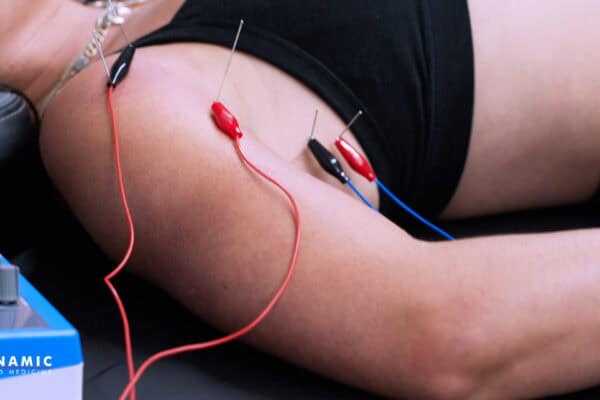

TMJ pain, clicking, jaw tightness, or the headaches and neck tension that come with it, often gets dismissed as something to manage rather than something to fix. Many people are told to wear a night guard, avoid hard foods, and live with it. That approach addresses the symptom without touching the cause.
The temporomandibular joint is a musculoskeletal structure. The muscles that control jaw movement, including the masseter, temporalis, and pterygoids, are subject to the same dysfunction that affects any other muscle group: trigger points, adhesions, restricted range of motion, and compensatory patterns driven by factors elsewhere in the body. That makes it treatable with the same tools we use for every other musculoskeletal problem.
What Is the TMJ?
The temporomandibular joint connects your jawbone (the mandible) to your skull just in front of each ear. It’s one of the most used joints in the body, active every time you chew, speak, or swallow. The joint relies on a disc and surrounding muscles and ligaments to function correctly.
TMJ disorders (TMD) describe a range of problems involving this joint, the muscles that control it, or both. Pain can be local to the jaw, or it can refer into the ear, temple, neck, and even down into the shoulder depending on which muscles are involved.
Why the Jaw and Neck Are Closely Connected
The cervical spine and TMJ share neurological pathways, muscular connections, and postural dependencies. Forward head posture, which is extremely common in desk workers, increases the demand on the jaw muscles to maintain occlusion. Cervical joint dysfunction can directly refer pain to the jaw and temple region through shared nerve supply. Suboccipital muscle tension at the base of the skull is a frequent driver of both TMJ pain and tension headaches.
This means that many TMJ cases can’t be fully resolved without also addressing the cervical spine. Treating the jaw in isolation while ignoring the neck is a common reason outcomes are incomplete.
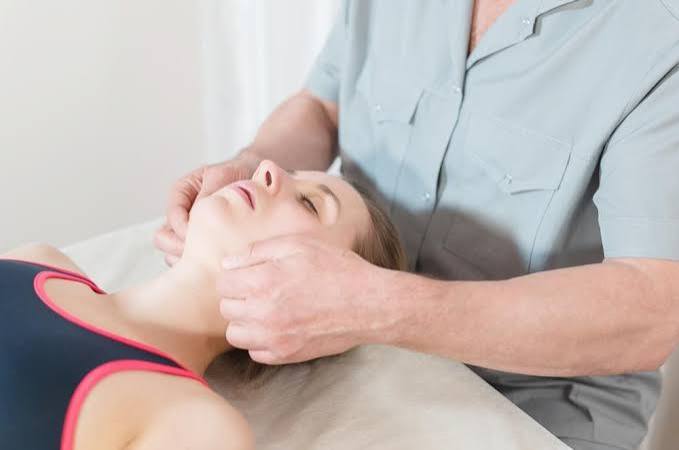
Common Causes of TMJ Pain
How We Treat TMJ at DSM
We approach TMJ disorders as a musculoskeletal problem with a musculoskeletal solution. Treatment typically involves:
This isn’t a replacement for dental management when disc displacement or bite issues are primary. But for the majority of TMJ cases driven by muscular and cervical factors, this approach produces meaningful and lasting relief.