
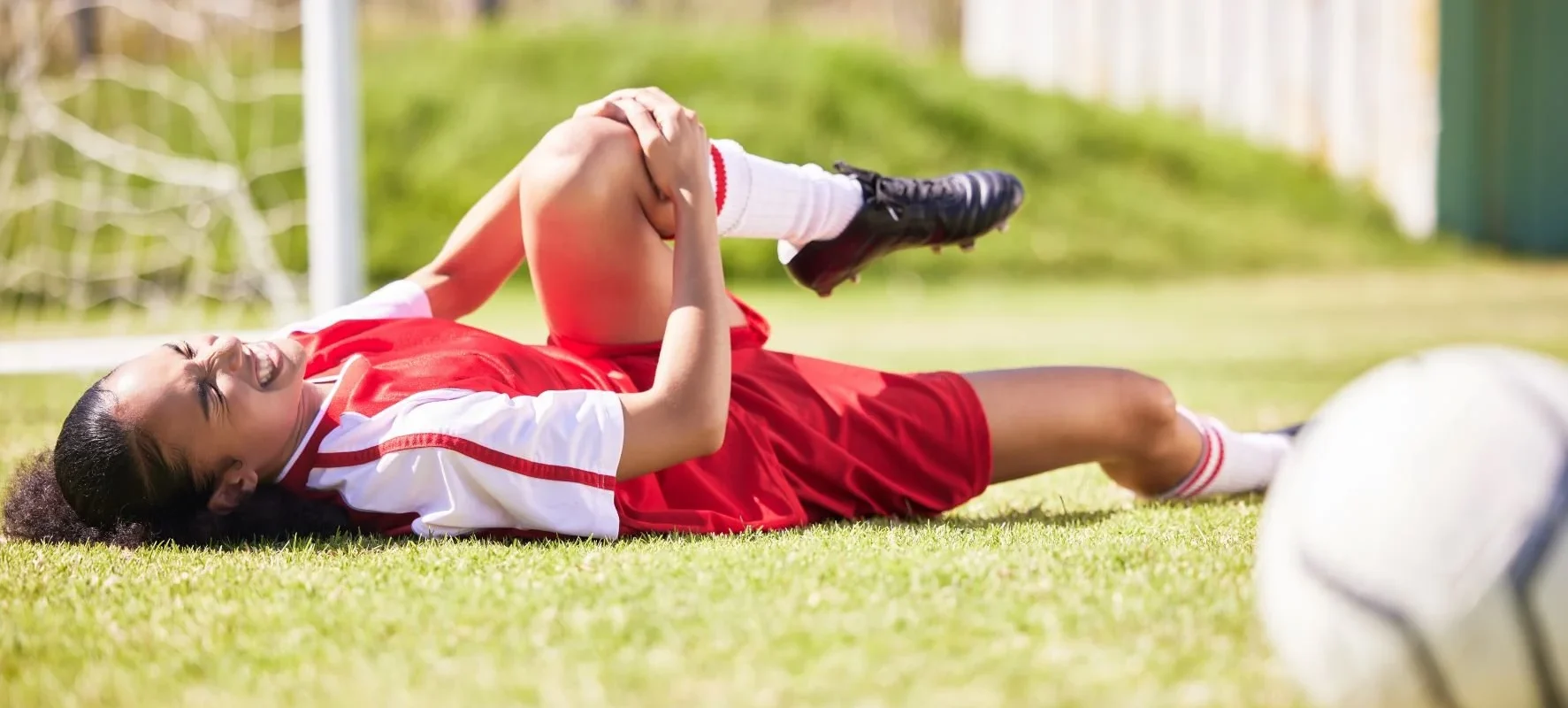

If your daughter plays soccer, volleyball, or basketball, you’ve probably already heard the term “ACL tear” — maybe from a rival team, maybe from one of her own teammates. It’s not paranoia. Female athletes in cutting and jumping sports get hurt this way more often than male athletes playing the same sports at the same level.
That gap isn’t bad luck, and it isn’t something you just have to accept. Research consistently points to specific, identifiable reasons behind it — and, more usefully, to specific training habits that lower the risk. None of it involves gadgets or shortcuts. It’s unglamorous, repeatable work done well before an athlete ever steps on the field.
Why Female Athletes Face Higher ACL Risk in Cutting and Jumping Sports
Soccer, volleyball, and basketball all demand the same dangerous combination: hard deceleration, sudden direction changes, and single-leg landings from a jump. Any athlete doing that repeatedly is at some risk. But sports medicine research has consistently found that female athletes get injured this way at higher rates than their male counterparts in identical sports and positions.
The reasons are a mix of anatomy, hormones, and movement patterns developed over years of training. None of them are anyone’s fault, and none of them are fixed. That’s the part parents and coaches need to hear — this is a training gap, not a genetic sentence.
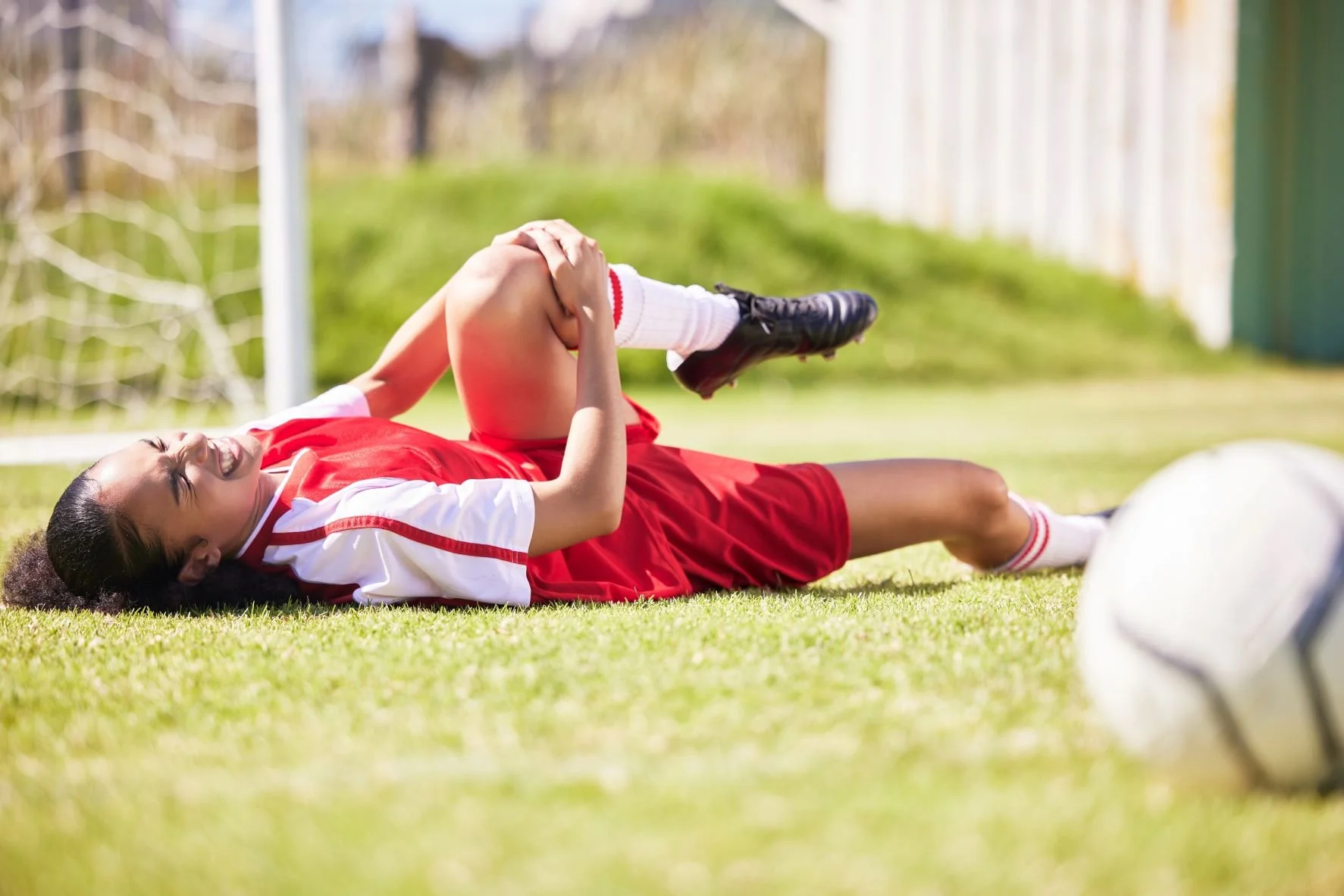
The Biomechanics Behind It
Most of the research on this topic centers on how female athletes tend to move differently under load, especially when landing or cutting. Common patterns sports medicine providers look for include:
- Knee valgus: the knee caving inward toward the other leg during a landing or cut, instead of tracking straight over the foot.
- Quad-dominant landings: relying heavily on the front-of-thigh muscles to absorb force, with less help from the hamstrings and glutes, which puts more strain directly on the ACL.
- Weak single-leg control: a lot of youth training happens two-footed. Sports don’t work that way. Cutting, pivoting, and landing off a header all happen on one leg.
None of these patterns show up on a highlight reel. They show up in slow motion, on video, or during a hands-on movement assessment — which is exactly why they get missed until after an injury.
Prevention Programs That Actually Work
This is the part that matters most, and it’s genuinely good news: neuromuscular training programs have real evidence behind them for reducing ACL injury risk in female athletes. The effective ones share a few common ingredients.
- Neuromuscular training: drills that retrain how the brain and muscles coordinate a landing, so the body defaults to safer mechanics without the athlete having to think about it mid-play.
- Landing and jumping mechanics coaching: direct, specific coaching on how to land — knees over toes, soft landings, controlled deceleration — repeated until it’s automatic.
- Structured strength and plyometric work: progressive strength training for the hips, glutes, and hamstrings, paired with jump training that builds power and control together, not just one or the other.
What doesn’t hold up nearly as well: generic stretching routines, one-time clinics, or programs that aren’t actually run consistently. Most sports medicine guidelines are clear that these programs work because they’re repeated, not because they’re clever.
What Parents and Coaches Can Push Programs to Adopt
You don’t need to become a strength coach to make a difference here. You need to ask the right questions of the ones already running practice.
- Does the team run a structured warm-up focused on landing and movement mechanics before every practice and game — not just occasionally?
- Is strength and plyometric training built into the season, not treated as an offseason extra?
- Does anyone on staff know how to spot risky landing patterns, or is it left to chance?
If the answer is no across the board, that’s a real gap worth raising with a coach or athletic director. Our teams at the Southlake and Cedar Park locations work directly with local club and school programs to build these habits into regular practice, not as a separate appointment.
When a Movement Screening Makes Sense
A movement screening is a hands-on assessment where a provider watches your athlete jump, land, and cut, and looks for the specific mechanical patterns tied to higher ACL risk. It takes less time than most people expect, and it gives you something concrete instead of a guess.
It’s worth scheduling one before a new season starts, after a growth spurt (which can temporarily throw off coordination and control), or after any previous knee or ankle injury. It’s also worth it if your athlete has simply moved up a level of competition, since the demands on her body just changed. Our providers at the Westlake Hills office and across DSM run these screenings regularly for youth and high school athletes heading into fall sports.
ACL injuries in young female athletes aren’t inevitable. The risk is real, the reasons are understood, and the training that lowers it is proven. The only question is whether it’s happening consistently for your athlete right now.