
If you’ve dealt with headaches for years, you may have been told they’re tension headaches or migraines. You manage stress, take medication when needed, and push through—yet the headaches keep coming back.
What many people don’t realize is that a large percentage of chronic headaches don’t originate in the head at all. They start in the neck.
These are called cervicogenic headaches, and treating the neck—rather than only managing head pain—can lead to meaningful, lasting relief.
Is Your Headache Coming From Your Neck?
Not all headaches are the same. Identifying the type matters because treatment approaches differ significantly.
Signs your headache may be cervicogenic:
- Pain starts at the base of the skull and travels forward
- Headache is often one-sided and consistent
- Neck stiffness or restricted motion is present
- Symptoms worsen with prolonged posture or neck movement
- Tenderness at the base of the skull
- Little to no nausea, vomiting, or light sensitivity
Why Neck Problems Cause Headaches
The upper cervical spine (C1–C3) plays a major role in head pain.
Shared Nerve Pathways: Nerves from the upper neck converge with nerves that transmit head pain. When neck joints, muscles, or connective tissue become irritated, the brain may interpret those signals as headache pain—often felt behind the eyes or across the forehead.
Muscle & Fascial Trigger Points: Tight muscles and fascial restrictions at the base of the skull, upper traps, and shoulders can refer pain to the temples, forehead, and eye region.
Joint Dysfunction: Restricted or irritated joints in the upper neck can create local pain that radiates upward, especially with movement or sustained posture.
Common Contributors to Neck-Related Headaches
- Prolonged desk work and forward head posture
- Poor endurance of deep neck stabilizers
- Prior neck injury (including whiplash)
- Inadequate pillow or sleep positioning
- Chronic stress and muscle guarding
How to Fix Headaches Caused by Neck Tension
If the headache originates from the neck, treating the head alone won’t resolve it. At Dynamic Sports Medicine, our approach focuses on:
- Identify the Source: We assess cervical joint mechanics, muscle tone, nerve involvement, posture, and movement patterns to determine which structures are driving symptoms.
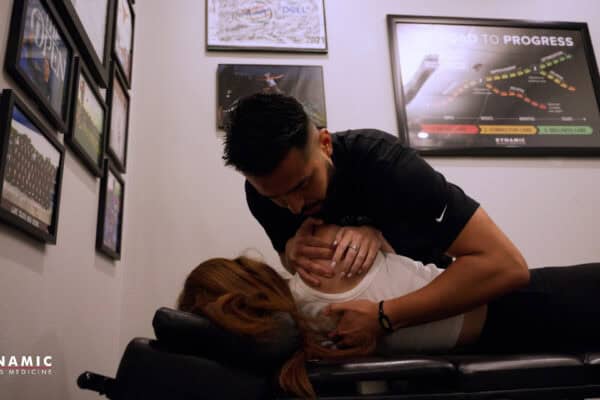
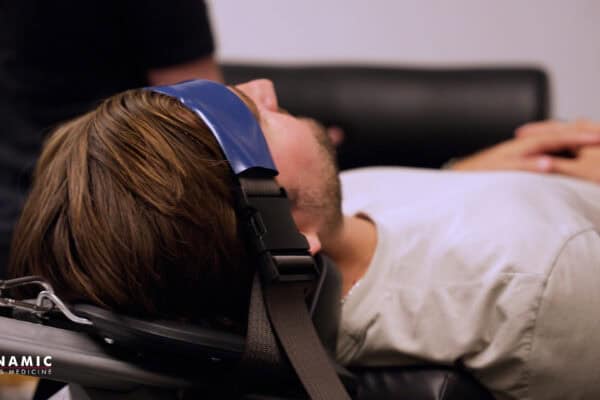
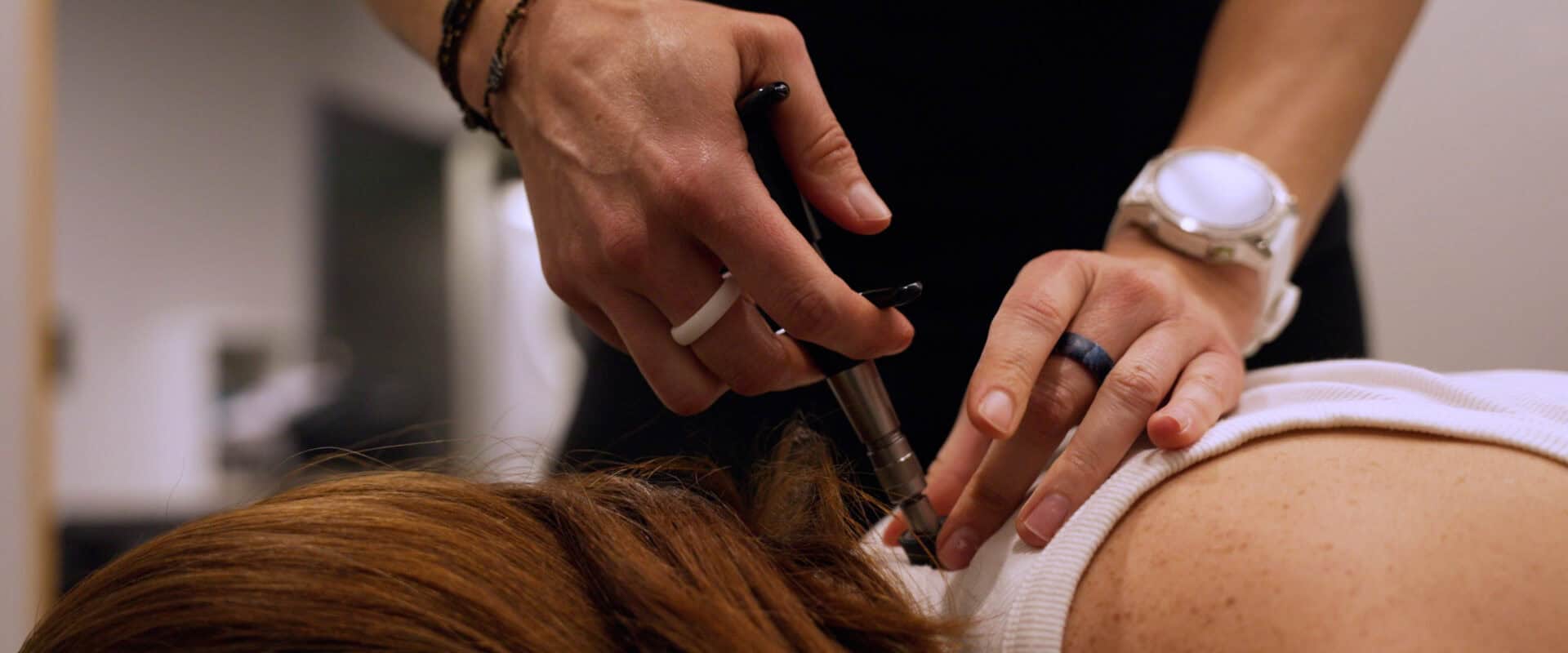
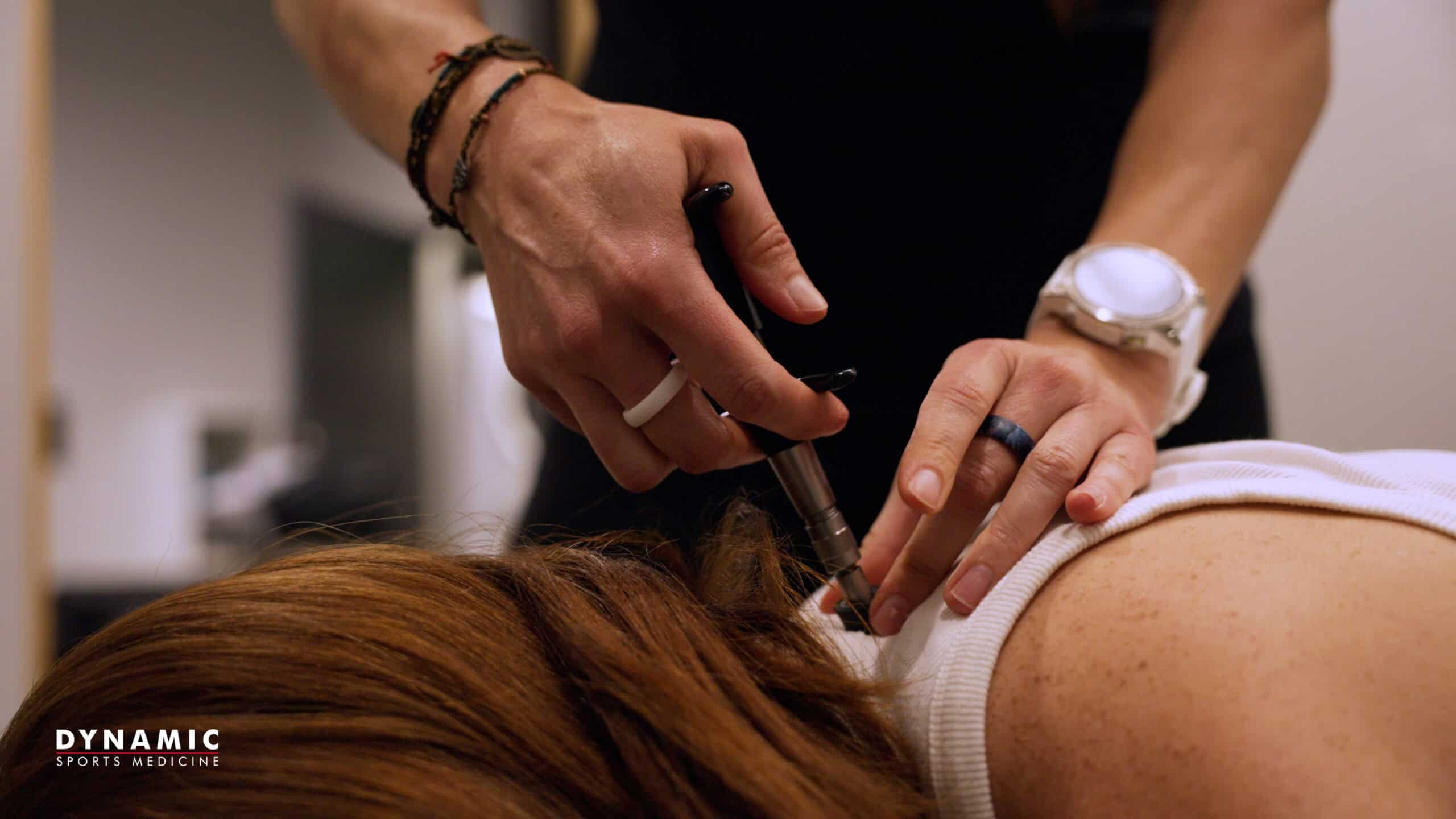
- Reduce Irritation & Restore Motion: Myofascial release, chiropractic adjustments, advanced spinal decompression when appropriate, and red light therapy to support cellular healing.
- Build Capacity & Prevent Recurrence: Deep neck flexor and upper back strengthening, movement-based posture strategies, and ergonomic guidance to reduce sustained strain.
Most patients with cervicogenic headaches experience reduced headache frequency within the first few visits, with significant overall improvement within 2–4 weeks. The goal isn’t just fewer headaches—it’s a neck that can tolerate daily demands without triggering pain.