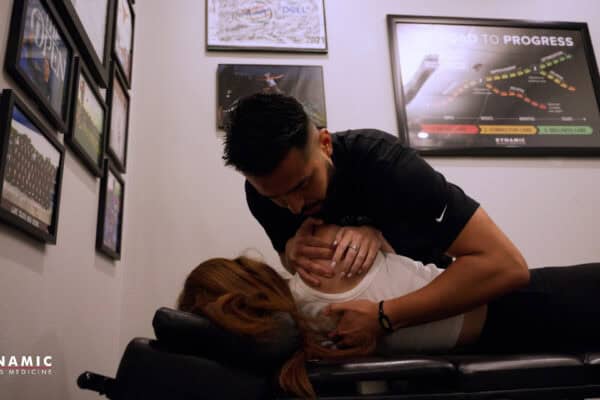


If you’re dealing with pain or injury, you’ve probably heard both suggestions: “Go see a chiropractor.” “No, you need physical therapy.”
It’s understandable to feel confused. The truth is, both professions play an important role in musculoskeletal care, and in many cases, they work best together.
At Dynamic Sports Medicine, we collaborate closely with physical therapists—often referring back and forth depending on the situation. The real question isn’t chiropractor vs physical therapist. It’s what does your body need right now, and who is best equipped to guide that process?
The Modern Reality: More Overlap Than Ever
Gone are the days when chiropractic was only adjustments and physical therapy was only exercises. Today:
- Many chiropractors integrate rehabilitation and strength training
- Many physical therapists use manual therapy and joint mobilization
- Both professions treat pain, movement dysfunction, and injury
The biggest differences often come down to training emphasis, clinical responsibility, and how complex cases are managed.

Where Sports Chiropractors Often Step In
One key distinction—especially in sports medicine—is clinical responsibility. Sports chiropractors are trained to diagnose complex musculoskeletal conditions, determine when imaging or referral is needed, manage acute pain, neurological symptoms, and mechanical dysfunction, and integrate manual therapy and rehabilitation under one roof.
This is why physical therapists frequently refer challenging or non-resolving cases to sports chiropractors—especially when joint mechanics, nerve involvement, or persistent pain are limiting progress.
When Physical Therapy Is Often the Right Fit
Physical therapy is an excellent choice when:
- You’re recovering from surgery
- You’re rehabbing a known injury
- You need structured return-to-sport progression
- Strength, endurance, or movement patterns are the primary limitation
We regularly refer patients to trusted PTs when long-term rehab or sport-specific progression is the next step.
When a Sports Chiropractor May Be the Better Starting Point
Consider seeing a sports chiropractor if:
- Pain is acute, severe, or unclear
- You have neck or back pain limiting movement
- Symptoms haven’t improved with prior care
- Joint restriction or nerve irritation is present
- You want a clear diagnosis and a plan
At DSM, many patients begin care with us and transition seamlessly into PT—or vice versa—depending on what their body needs.
The Truth Most People Miss
The individual provider matters more than the profession. A great PT who does hands-on work and explains everything is invaluable. A great sports chiropractor who integrates rehab and education is equally invaluable. What matters most is clear explanation, thoughtful assessment, a plan that evolves, and a goal of independence. That’s how real results happen.