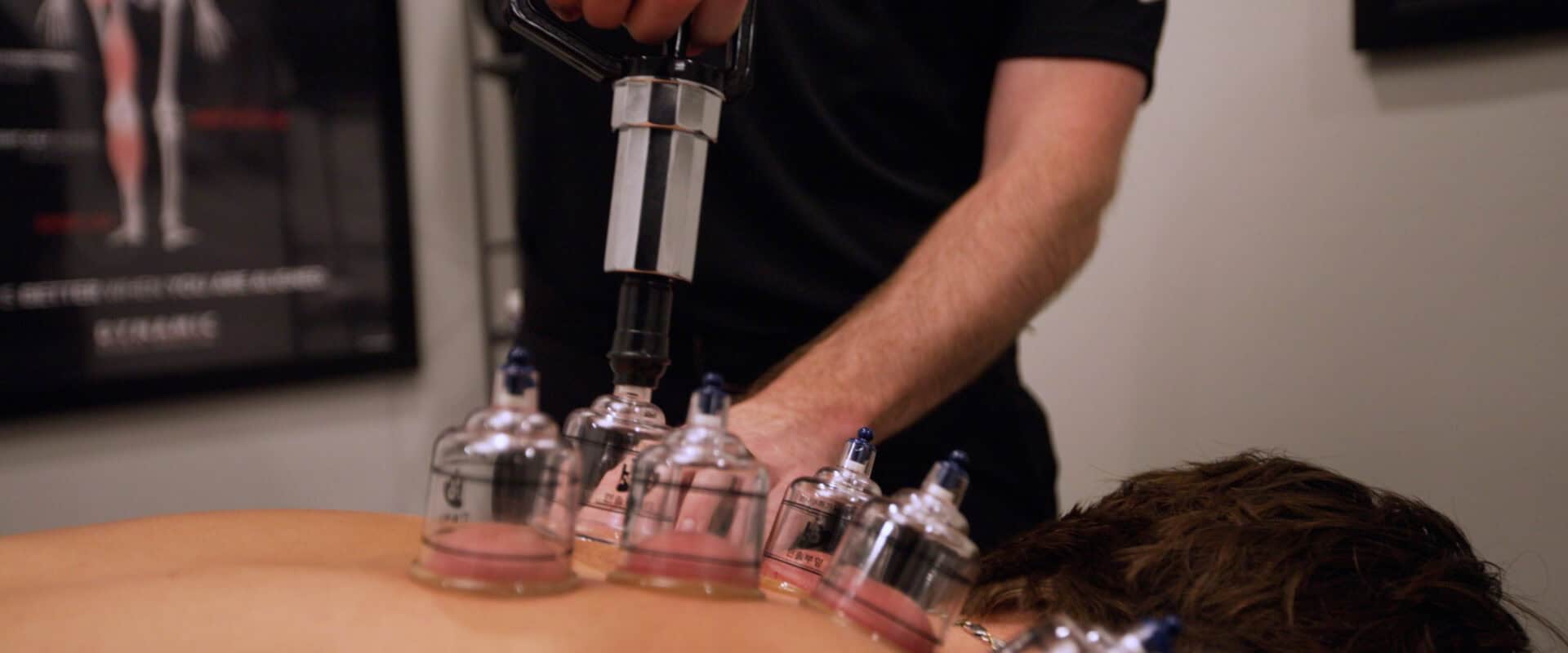

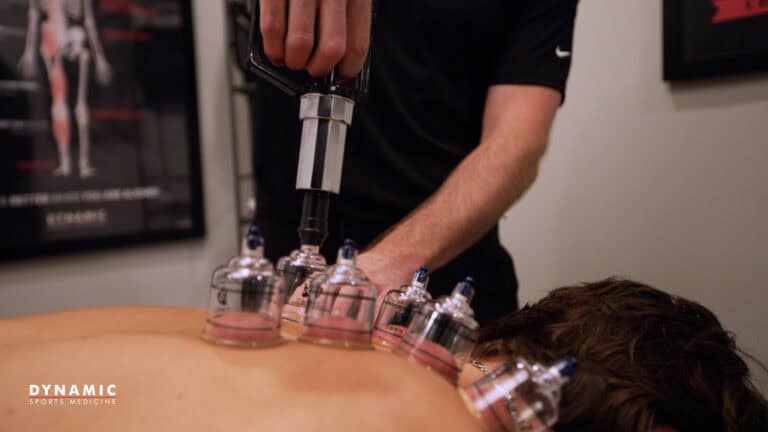
Cupping therapy being applied to an athlete's back to enhance recovery and reduce soreness, showcasing innovative sports medicine techniques.
Pain Relief

Cupping Therapy for Athletes in Austin, Dallas, and Houston: Recovery That Works

Dr. Matt Lowe, DC CCSP® By Dr. Matt Lowe, DC CCSP® ·

Why Athletes Choose Cupping Therapy

If you’ve been in a gym, a training facility, or a sports medicine office in Austin, Dallas, or Houston over the last five years, you’ve seen the marks. Round circles across someone’s traps, shoulders, or back. The conversation usually goes one of two ways: “Does that hurt?” or “Where do you go for that?”

Athletes put their bodies through controlled stress every day. Training creates micro-damage in muscle fibers, generates metabolic waste, and causes inflammation. Recovery is when your body repairs that damage and adapts. Anything that accelerates recovery means you can train harder, more often, and with less risk of injury.

  • It’s fast. A cupping session takes 15 to 30 minutes.
  • It’s drug-free. No NSAIDs, no painkillers, no substances that might flag on a drug test.
  • It targets what stretching can’t. Stretching lengthens muscle fibers. Cupping lifts and separates tissue layers.
  • It works immediately. Most athletes feel a noticeable difference in mobility and soreness within minutes.
How Dynamic Cupping Works for Athletes

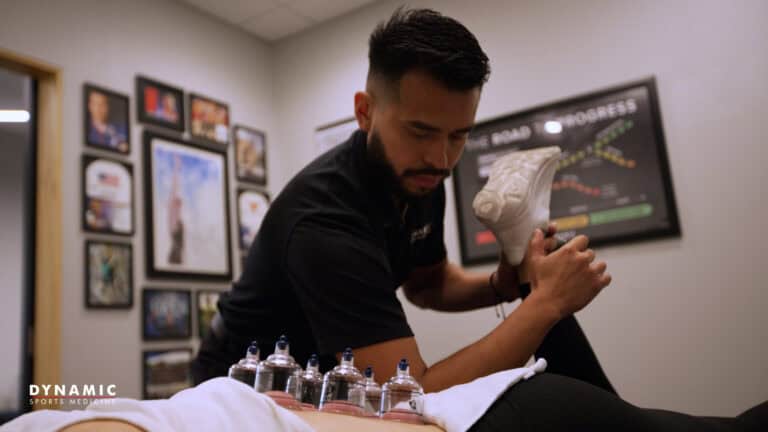
In dynamic cupping, cups are placed with suction and then moved across the skin while you actively move the joint or muscle. This combination of external suction and active movement creates a mobilization effect that’s hard to replicate with any other technique.

Fascial layers are being separated. Between your muscles and skin are layers of fascia that can become adhered or restricted from repetitive movement, impact, or inflammation. Dynamic cupping glides across these layers and breaks up adhesions.

Blood flow surges to the tissue. The suction draws blood into the area. More blood means more oxygen, more nutrients, and faster clearance of the metabolic byproducts that make you sore.

The nervous system responds. Cupping stimulates mechanoreceptors in the skin and fascia. This neurological input can decrease pain perception and reset muscle tone, which is why tight muscles often relax immediately during a session.

When to Use Cupping in Your Training

Pre-Training or Pre-Competition

A short dynamic cupping session before training can improve range of motion and reduce tissue stiffness. Best for athletes who feel restricted before activity, especially in the shoulders, hips, or thoracic spine.

Post-Training Recovery

After a hard session, cupping helps flush the byproducts of exercise from your muscles and kickstart the recovery process. Best for soreness management and maintaining consistency during high-volume blocks.

During Injury Rehabilitation

Cupping can be applied around the affected area to reduce pain, improve circulation, and support tissue healing. We often combine it with dry needling and manual therapy.

Maintenance

Some athletes use cupping on a regular schedule, weekly or biweekly, even when they’re not injured. Regular sessions keep tissue quality high and prevent the buildup of fascial restrictions.

Common Areas Athletes Get Cupped

  • Upper back and traps – The most popular area, especially for athletes who carry tension in the shoulders
  • Hamstrings – Runners, sprinters, and field sport athletes with chronic tightness
  • IT band and lateral thigh – Runners and cyclists with ITB tightness
  • Calves and Achilles area – For runners dealing with calf tightness or early-stage Achilles issues
  • Shoulders – Overhead athletes in baseball, swimming, volleyball, and CrossFit
  • Lower back – Athletes in rotational sports (golf, tennis, baseball) or heavy loading (powerlifting, CrossFit)

Cupping vs. Other Recovery Tools

Cupping vs. foam rolling: Both address soft tissue through different mechanisms. Foam rolling compresses tissue. Cupping lifts and separates it. They’re complementary, not competing.

Cupping vs. massage: Massage uses compression. Cupping uses decompression (suction). For fascial restrictions and deep adhesions, cupping can reach tissue layers that manual massage has difficulty accessing.

Cupping vs. NormaTec compression: NormaTec flushes fluid from extremities. Cupping is more targeted to specific problem areas.

Cupping vs. stretching: Stretching lengthens muscle fibers along their line of pull. Cupping addresses tissue layers perpendicular to the muscle.

Where Athletes in Texas Get Cupping Therapy

Dynamic Sports Medicine offers cupping therapy for athletes at every location in Austin, Dallas-Fort Worth, and Houston. Our providers are licensed sports medicine professionals who treat competitive and recreational athletes every day. Cupping is always part of a broader treatment plan that includes sports chiropractic, dry needling, myofascial release, and corrective exercise.

Cupping Therapy in Austin

Cupping Therapy in Dallas-Fort Worth

Cupping Therapy in Houston

Questions About Cupping for Athletes

Yes. Most athletes train the same day. Light to moderate activity is fine immediately after. Some prefer to schedule cupping on recovery days.

No. The marks are cosmetic only and do not affect muscle function or performance.

Most athletes notice improved mobility and reduced soreness immediately after a session. Cumulative benefits build over multiple sessions.

Dynamic Sports Medicine offers cupping therapy for athletes at nine locations across Austin (Downtown, Cedar Park, Georgetown, Westlake), Dallas-Fort Worth (Dallas, Southlake, Irving, Plano), and Houston (West University).

Add Cupping to Your Recovery Plan

Dynamic Sports Medicine has nine locations across Austin, Dallas-Fort Worth, and Houston. Whether you're a competitive athlete or a weekend warrior, our team is ready to help.

Book an Appointment
Aetna Humana Blue Cross Blue Shield Ambetter Cigna