

If you have been dealing with chronic tendon pain, plantar fasciitis, or stubborn soft tissue issues that haven’t responded to rest, stretching, or standard physical therapy, shockwave therapy is worth understanding. It’s one of the most evidence-backed tools we use at Dynamic Sports Medicine for exactly those cases, the ones where conventional approaches have plateaued.
What Is Shockwave Therapy?
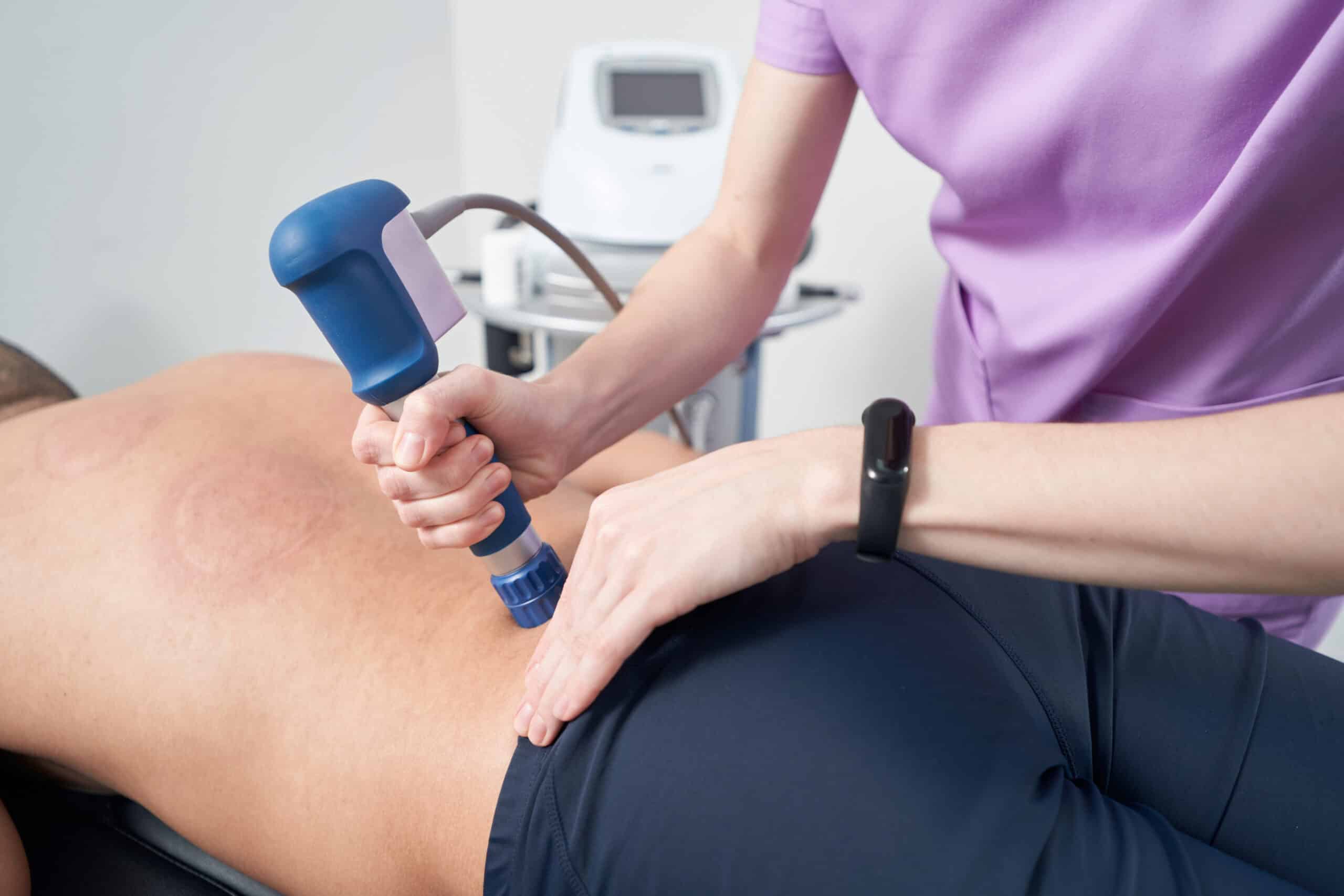
Shockwave therapy, also called extracorporeal shockwave therapy or ESWT, uses high-energy acoustic waves delivered through a handheld device to targeted tissue. The waves penetrate the skin and create mechanical pressure in the affected area at a cellular level.
It isn’t a sound machine and it isn’t ultrasound. The energy delivery and mechanism are entirely different. Shockwave creates a controlled microtrauma response in the tissue that triggers the body’s healing cascade in areas where healing has stalled.
How It Works
Tendons and chronic soft tissue injuries are challenging to treat because they often become hypovascular over time, meaning the blood supply to the affected area decreases. Without adequate blood flow, the tissue lacks the nutrients and cellular signals needed to remodel and repair. The body essentially gives up on it.
Shockwave reverses this. The acoustic waves stimulate neovascularization, the formation of new blood vessels, in the treated area. They also break up calcific deposits in tendons, disrupt pain signaling pathways, and activate the cells responsible for collagen production and tissue repair.
The result is a reset of the healing environment in tissue that has been stuck in a chronic state.
What It Treats
Shockwave therapy has the strongest evidence base for:
The common thread is chronic tendon or soft tissue pathology where normal healing has stalled. If conventional care has helped partially but you have hit a ceiling, shockwave is often what breaks through it.
What a Session Looks Like
Sessions typically last 10 to 20 minutes. A handheld applicator is placed on the skin over the target tissue, often with a gel for conductivity. You will feel a repetitive tapping or pulsing sensation. Some areas are more sensitive than others, particularly directly on a tender tendon, but the treatment should be tolerable.
You may feel increased soreness for 24 to 48 hours after the first session as the healing response activates. This is normal and expected. Most protocols involve three to five sessions spaced one to two weeks apart.
Why We Pair It With Other Treatment
Shockwave is a powerful tool. But it works best as part of a comprehensive plan. At Dynamic Sports Medicine, we combine it with manual therapy to address tissue restriction, a progressive loading program to rebuild the tendon’s structural capacity, and movement coaching to correct the mechanics that overloaded the tissue in the first place. Shockwave restarts the healing. The rest of the plan builds what needs to be built.