
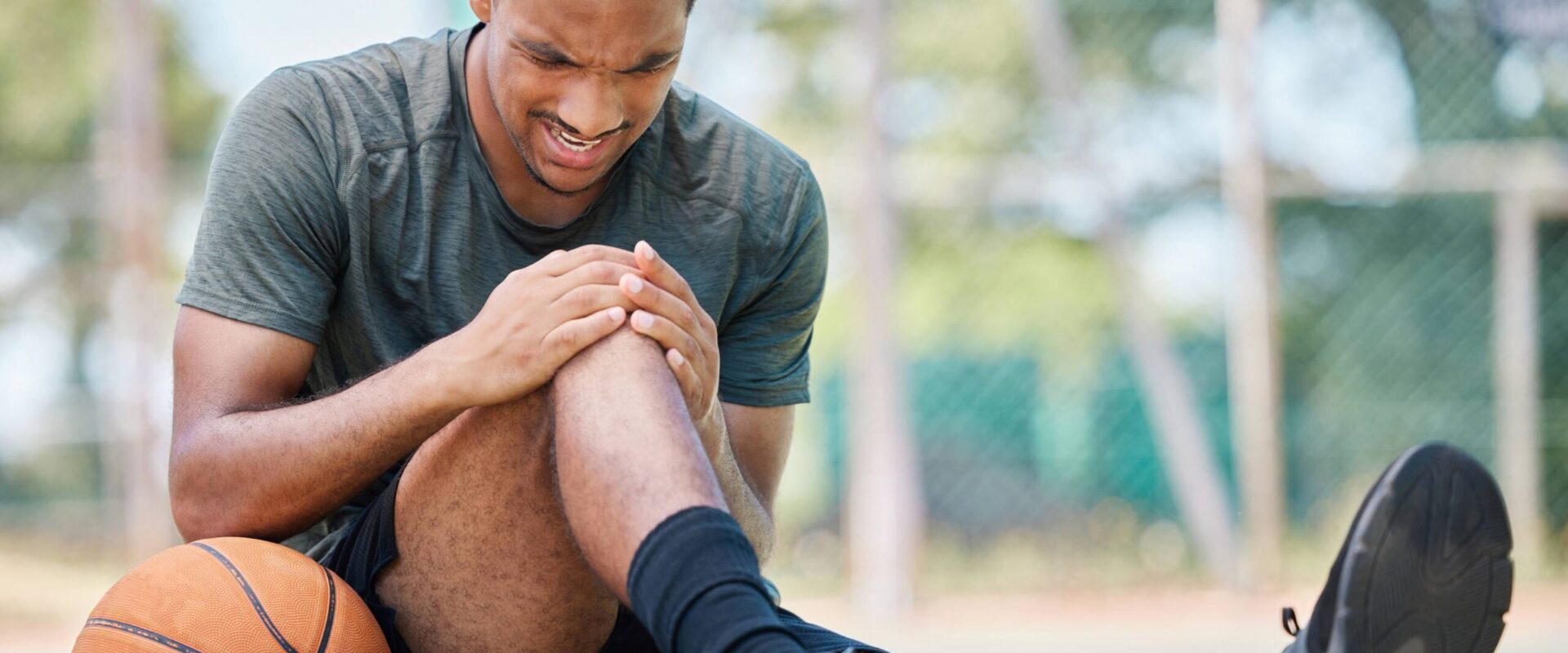

Basketball puts more stress on ankles, knees, and fingers than almost any other youth sport. Quick direction changes, jump landings, and contact under the rim add up fast over a season. Most of these injuries are treatable and most athletes get back on the court — but only if the injury gets handled right the first time, not just taped up and ignored.
Here’s a practical rundown of the basketball injuries you’ll see most in young athletes, what’s actually happening in the joint, and when it’s time to get it looked at instead of hoping it fades by the next game.
Why Basketball Has One of the Highest Injury Rates in Youth Sports
Basketball is a stop-start sport played on a hard, unforgiving surface. Athletes sprint, plant, cut, and jump dozens of times a game, then land under fatigue with another player crowding their space. There’s no grass to absorb impact and no pads to soften contact. Add a long season with multiple games a week, plus travel ball on top of school ball, and joints rarely get a real break.
Young athletes carry extra risk here. Growth plates, the developing cartilage near the ends of bones, are softer than mature bone and more vulnerable to repetitive stress. That’s part of why an injury that would be minor in an adult can be more serious in a growing kid, and why it’s worth taking basketball injuries seriously from the first tweak.
Ankle Sprains: The Most Common Basketball Injury
Ankle sprains are, by a wide margin, the most common injury in basketball. They usually happen when a player lands a jump shot on an opponent’s foot, or plants hard to change direction and the ankle rolls inward. A sprain means the ligaments holding the ankle joint together get stretched or torn.
The real problem isn’t the first sprain. It’s what happens after. A lot of young athletes rest for a few days, feel better, and go straight back to full-speed cutting. But the ligament hasn’t fully healed, and the ankle’s sense of balance and position, known as proprioception, takes longer to recover than the swelling does. That’s why ankle sprains in basketball players tend to recur, and each repeat sprain tends to be worse than the last.
- Proper recovery includes rest, support or bracing, and a gradual return to full-speed movement
- Balance and strength work should happen before your athlete returns to cutting and jumping, not after
- A “rolled ankle” that keeps happening to the same player is a sign the first one was never fully rehabbed
Knee Injuries From Jumping, Cutting, and Landing
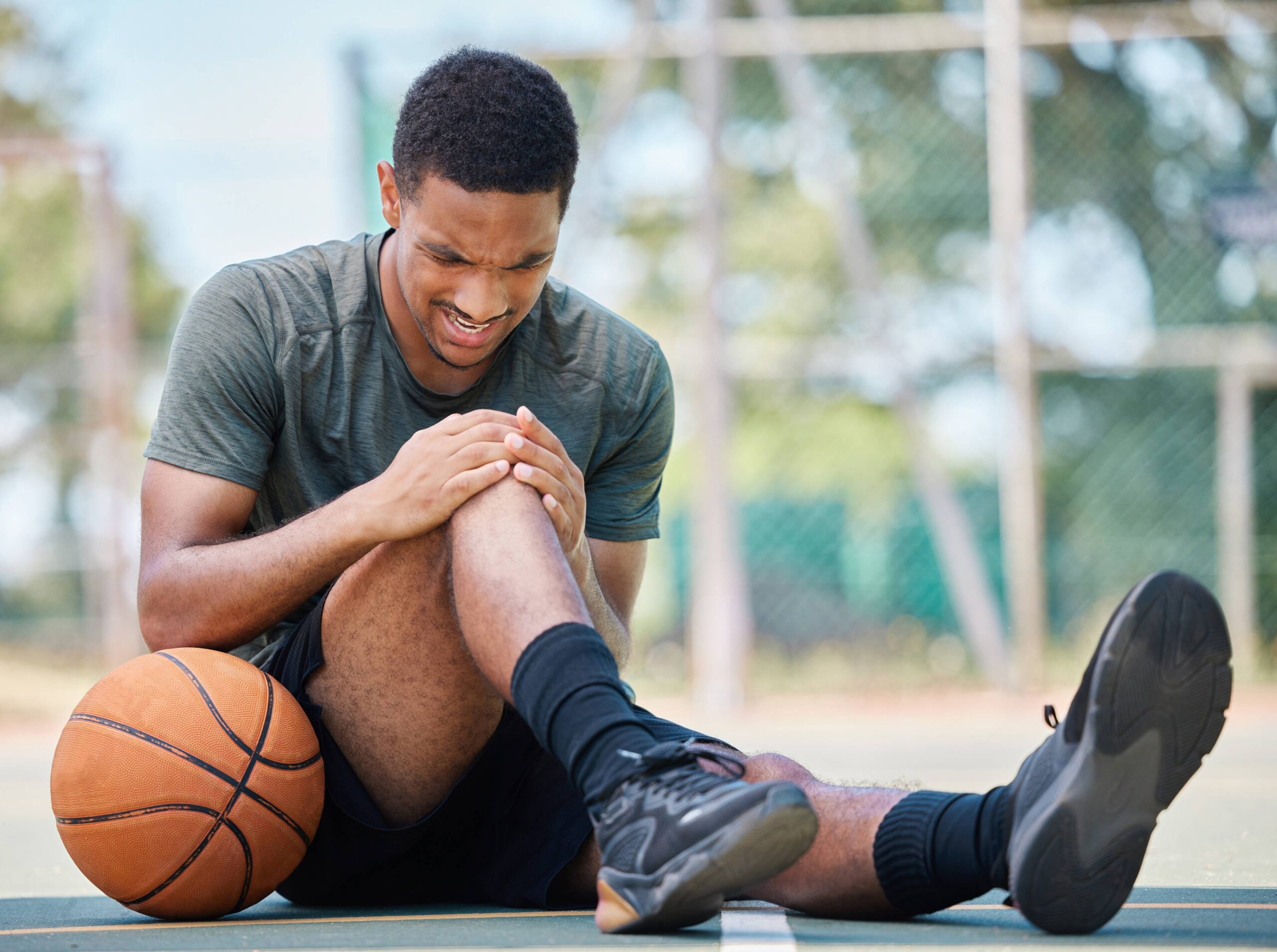
Basketball’s constant jumping and hard directional changes put real load on the knee. The most common issues range from jumper’s knee, an irritation of the tendon below the kneecap from repetitive jumping, to more serious ligament and cartilage injuries, including tears to the ACL, the ligament that stabilizes the knee, or the meniscus, the cartilage that cushions the joint. Non-contact knee injuries often happen on an awkward landing or a sudden pivot, not from a collision.
Younger athletes going through a growth spurt face an added issue: growth plate irritation at the knee, sometimes called Osgood-Schlatter, which shows up as pain and tenderness just below the kneecap. It’s common in growing basketball players and usually responds well to load management and the right rehab, but it needs to be identified correctly, not brushed off as “growing pains.”
Finger and Hand Injuries Nobody Talks About
Jammed fingers happen constantly in basketball — a ball off the tip of the finger, a collision going for a rebound. The instinct is always the same: tape it to the next finger and keep playing. Most of the time that’s fine. Sometimes it isn’t.
A finger that won’t fully straighten, stays swollen well past a few days, or hurts at the joint rather than just the tip can mean a small fracture or a tendon injury rather than a simple jam. Left untreated, some of these injure the tendon in a way that heals crooked or leaves a permanent bend in the finger. It’s a small joint, but it’s also one of the most commonly mismanaged injuries in youth basketball simply because it looks minor. It’s worth seeing a doctor if you’re experiencing:
- Difficulty straightening the finger fully after a day or two
- Swelling concentrated at one joint, not the whole finger
- Pain that’s still sharp after the first 48 hours
When to Get an Injury Checked Instead of Taping It and Playing On
Taping it up and playing through is fine for minor issues. It’s the wrong call for anything that shows these signs:
- Your athlete can’t bear full weight or can’t move the joint through its normal range
- Visible swelling, bruising, or deformity shows up right away
- Pain doesn’t meaningfully improve after 48 to 72 hours of rest
- The same joint has been injured more than once this season
- There’s numbness, tingling, or a feeling that the joint might give out
For growing athletes, persistent pain near a joint deserves extra caution. Growth plates don’t show up clearly on a quick look, and what feels like a routine sprain or jam can be something that needs a different approach to heal correctly.
Getting Your Athlete Back on the Court the Right Way
The goal isn’t just to make the pain go away. It’s to get your athlete back to full speed without setting up the next injury. That means an accurate diagnosis, a rehab plan that matches how basketball actually moves an ankle, knee, or hand, and a clear return-to-play timeline instead of a guess.
Dynamic Sports Medicine works with young basketball players across our 14 locations, treating the injury and the athlete behind it. If your kid rolled an ankle, jammed a finger that won’t straighten, or has knee pain that isn’t going away, don’t wait for it to become a bigger problem next season.