
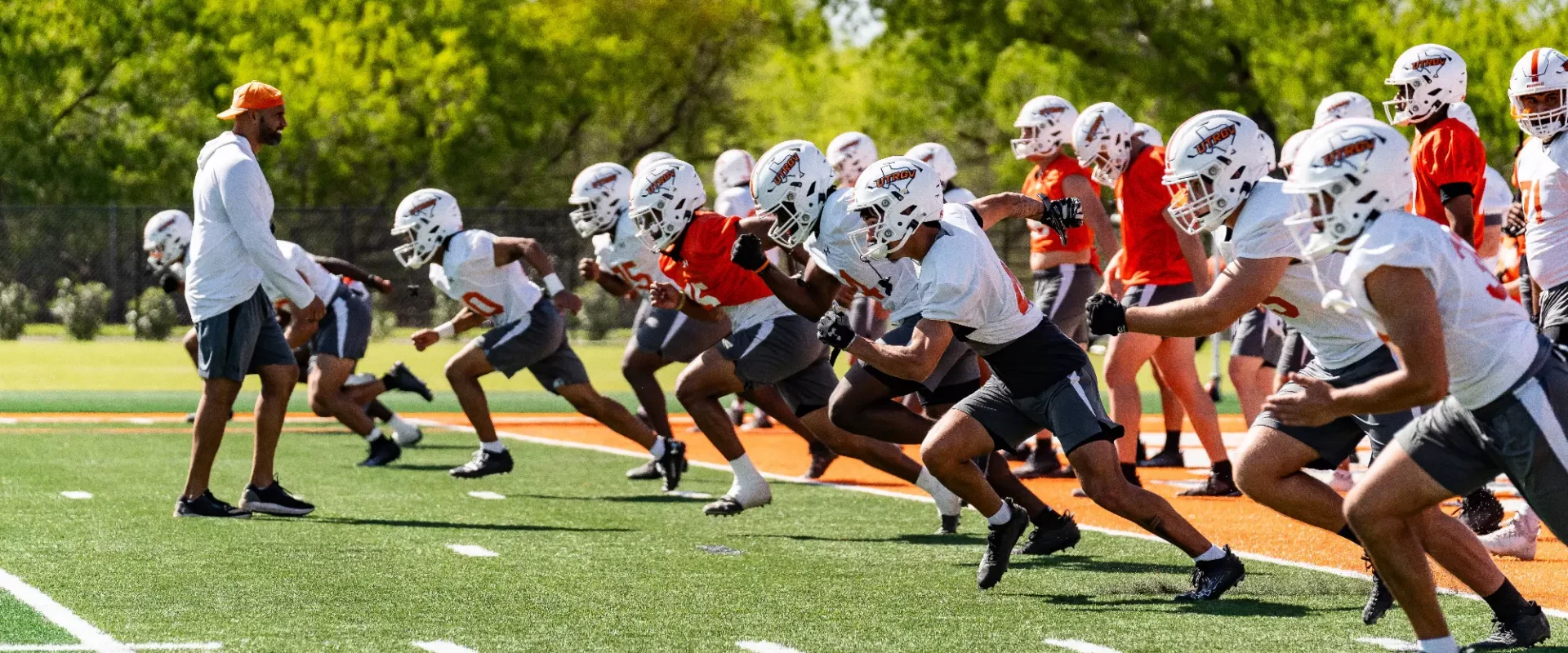

Two-a-days start in August, and August in Texas means one thing: heat that can turn a normal practice into a medical emergency in minutes. Heat illness isn’t a rare, freak occurrence in youth and high school football — it’s one of the most predictable, most preventable dangers of the season. The difference between a scary moment and a tragedy usually comes down to how fast the people on the sideline recognize what’s happening.
At Dynamic Sports Medicine, we work with athletes, parents, and coaches across Texas, and every August we see the same pattern: kids who push through symptoms because no one taught them what those symptoms mean. Here’s what parents and coaches actually need to watch for.
Why Texas Football and Heat Illness Go Together
Football is uniquely bad for heat exposure compared to other fall sports. Practices run in full pads during the hottest weeks of the year, workouts are high-intensity and stop-and-start, and linemen and larger athletes generate more body heat with less surface area to release it. Add Texas humidity, and sweat stops evaporating efficiently — which means the body’s main cooling system stops working as well as it should.
Young athletes are also physiologically less efficient at regulating heat than adults. They produce more metabolic heat relative to their body mass, sweat less per gland, and take longer to acclimatize to hot conditions. That’s exactly why the first week or two of two-a-days is the highest-risk window of the entire season.
The Warning Signs Every Parent and Coach Should Know
Heat illness exists on a spectrum, and it can move from mild to life-threatening faster than most people expect.
- Heat cramps — painful muscle spasms, usually in the calves, quads, or abdomen, often the first sign something’s off
- Heat syncope — dizziness or fainting, especially when standing after sitting or kneeling
- Heat exhaustion — heavy sweating, pale or clammy skin, nausea, headache, weakness, and a rapid pulse
- Heat stroke — confusion, slurred speech, loss of coordination, hot and dry (or still sweaty) skin, and core body temperature above 104°F
The athlete experiencing heat stroke is often the last one to recognize something is wrong. Confusion and irritability are symptoms, not character flaws — which is exactly why it’s the people watching from the sideline, not the player, who catch it first.
Heat Exhaustion vs. Heat Stroke: Know the Difference
This is the distinction that matters most, because the response is different.
Heat exhaustion is serious but typically resolves with rest, fluids, and cooling. Heat stroke is a medical emergency. The clearest red flag is mental status — an athlete who is confused, combative, unsteady on their feet, or not making sense is a 911 call, not a “walk it off.” Core temperature is the other tell: heat stroke means the body has lost the ability to cool itself.
Treat uncertainty as heat stroke. That’s how we protect our athletes at DSM.
What to Do If You See These Signs
Speed matters more than technique here.
- Get the athlete out of the sun and out of pads and equipment immediately
- Cool the body as fast as possible — ice water immersion is the gold standard; if that’s not available, cold, wet towels on the neck, armpits, and groin work as a bridge
- Call 911 for any signs of altered mental status, confusion, or loss of coordination
- Do not give fluids by mouth if the athlete is not fully alert
- Cool first, transport second — this is the single most important rule in heat stroke management. On-site cooling before EMS arrival is what improves outcomes.
Prevention Starts Before Kickoff
The good news: heat illness is one of the most preventable emergencies in sports.
- Acclimatization — gradually increasing practice intensity and equipment over the first 7–14 days of two-a-days, per UIL guidelines
- Hydration before practice starts, not just during — waiting until an athlete is thirsty means they’re already behind
- Work-to-rest ratios adjusted for heat index, not just the clock
- Cooling stations and shade breaks built into every practice, not reserved for emergencies
- Knowing individual risk factors — athletes who are overweight, deconditioned, sick, sleep-deprived, or on certain medications are at higher risk and need closer monitoring
Coaches carry a lot of this responsibility, but parents play a role too — sending a well-hydrated, well-rested athlete to practice, and speaking up immediately if something looks off, even if the athlete insists they’re fine.
When to Bring In Sports Medicine
Any athlete who has experienced heat exhaustion or heat stroke should be evaluated before returning to full activity — not just cleared to go back out the next day because they “feel fine.” Our team works with coaches and athletic trainers across our Southlake, Plano, McKinney, and Cedar Park locations to build return-to-play plans that account for hydration status, conditioning level, and any lingering symptoms — because the goal isn’t just getting a kid back on the field, it’s making sure they can handle being there.