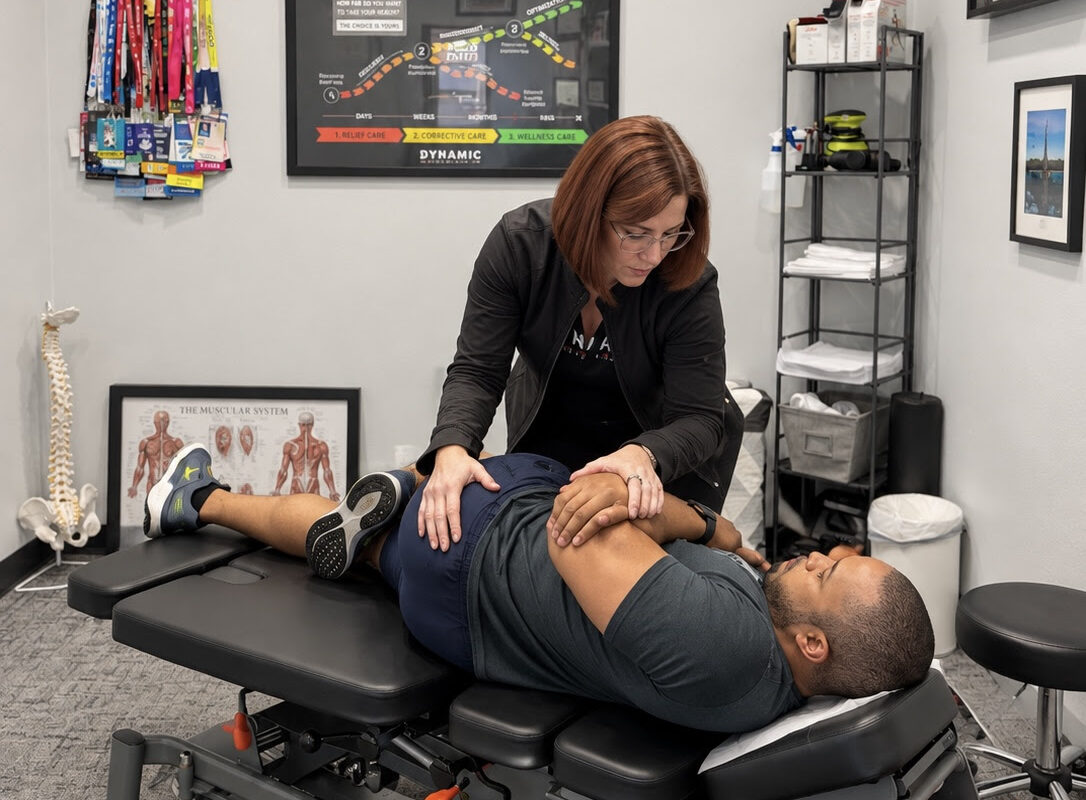

Houston doesn’t slow down for heat, humidity, or traffic, and its athletes don’t either. Runners knock out laps on the Rice loop before the sun gets brutal. Golfers grind through swing changes at west Houston country clubs. Youth soccer and baseball players fill weekend calendars across the city. Every one of them eventually runs into the same problem: pain or a limitation that’s slowing them down, and a need for someone who actually knows how to fix it.
DSM built its reputation in Austin and Dallas–Fort Worth. Now we’re bringing the same approach to Houston, with two locations positioned to cover both the inner loop and west Houston: West University and Royal Oaks.
One Standard, Wherever You Walk In
A new market doesn’t get a watered-down version of DSM. Every location, in every city, starts the same way: a real assessment of how you move, not just where it hurts. Your hip, your ankle, your low back, your shoulder. We look at the whole chain, because pain in one spot is often a symptom of a problem somewhere else.
From there, treatment draws from the same toolkit at every clinic: chiropractic care to get joints moving the way they’re supposed to, dry needling to release the muscle tissue that’s holding you back, spinal decompression for compressed discs and nerve pain, shockwave therapy for stubborn tendon and soft tissue injuries, and rehab programs built around getting you back to the activity you actually care about. Same team approach, same standard, same results. The only thing that changes is your commute.
West University: Inner-Loop Athletes Who Don’t Sit Still
West U and the neighborhoods around it are some of the most active in Houston. Runners log miles on the Rice University loop and along Brays Bayou. Families juggle youth baseball, soccer, and volleyball seasons year-round. Tennis and pickleball players fill neighborhood courts. And a large share of the community works long hours in the Texas Medical Center or downtown, then tries to make up for it with a hard workout on the weekend, a combination that produces a lot of low back pain, tight hips, and shoulder issues.
Our West University location, at 4032 Bellaire Blvd, West University Place, Texas 77005, sits right on Bellaire Boulevard, convenient for West U, Bellaire, Southside Place, Rice Village, and River Oaks. Whether you’re training for the Houston Marathon, managing an overuse injury in a young athlete, or just trying to get out of bed without wincing, this clinic runs the full DSM approach a few minutes from home.
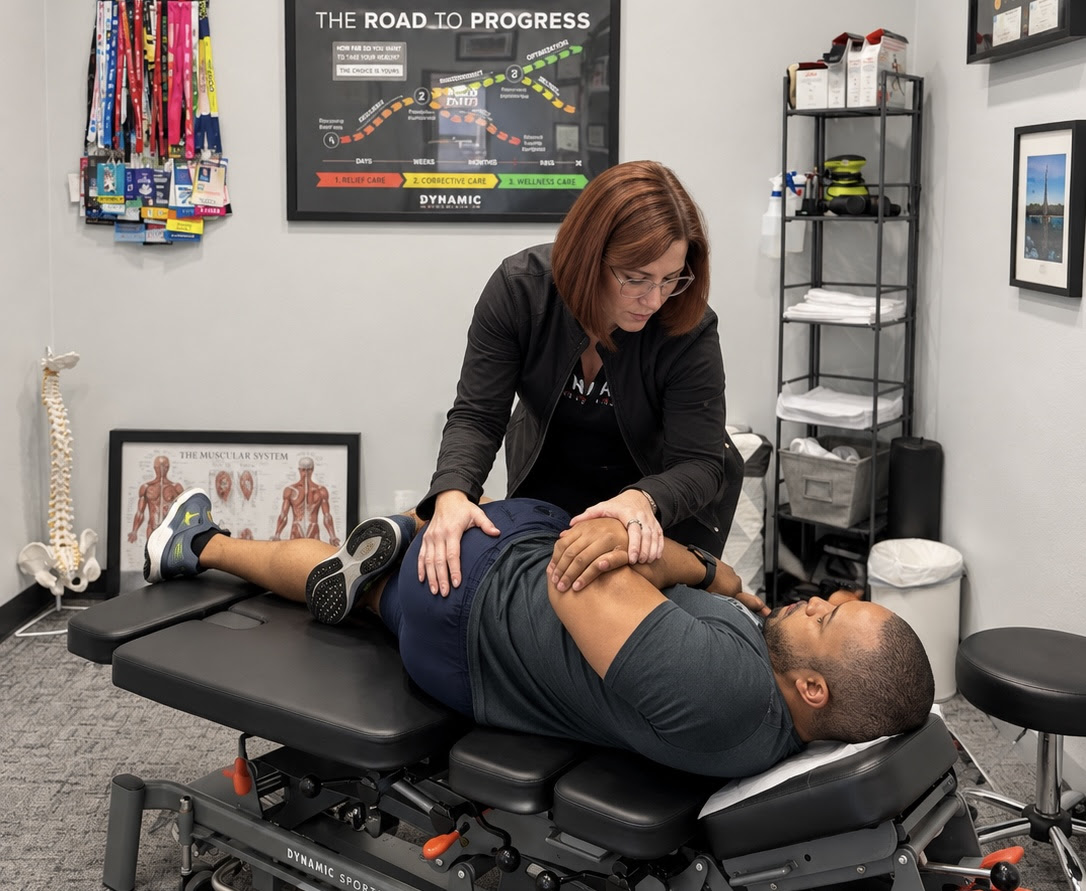
Royal Oaks: West Houston’s Golfers, Cyclists, and Corridor Commuters
West Houston trains differently. Between golf and tennis at the area’s country clubs, cyclists and runners on the Terry Hershey Park trails, and an Energy Corridor workforce that spends the week behind a desk, the Royal Oaks area sends a wide range of injuries through the door: swing-related back and shoulder pain, recurring strains in weekend league players, and the stiffness that comes from long commutes followed by an aggressive workout. It’s a community that trains around a packed schedule, which means injuries often get pushed off until they’re serious.
Our Royal Oaks location, at 11805 Westheimer Rd, Suite 390, Houston, Texas 77077, is built to catch those injuries early and get you back to your round, your ride, or your training block without losing months to something that could have been handled in weeks.
Part of a Statewide Network
West University and Royal Oaks are DSM’s home in Houston, but they’re backed by clinics across Austin and Dallas–Fort Worth running the exact same standard of care. If work or travel takes you to another part of Texas, your treatment plan goes with you.
Why Two Houston Locations Beat One
A single clinic in one corner of Houston only works for the people who live near it. Traffic on the 610 Loop or the Katy Freeway shouldn’t be the reason you skip a follow-up appointment or push through pain instead of treating it. With a location inside the Loop and another in west Houston, the care that starts in West U doesn’t stall out if your schedule pulls you toward the Energy Corridor, and a plan built in Royal Oaks holds up just as well if you’re closer to Bellaire that week.
That continuity matters more than people think. Recovery isn’t a single visit. It’s a series of adjustments, follow-ups, and rehab sessions that build on each other. When every location runs the same standard, you’re not starting over every time life gets in the way. You’re picking up where you left off, with a team that already knows how you move.