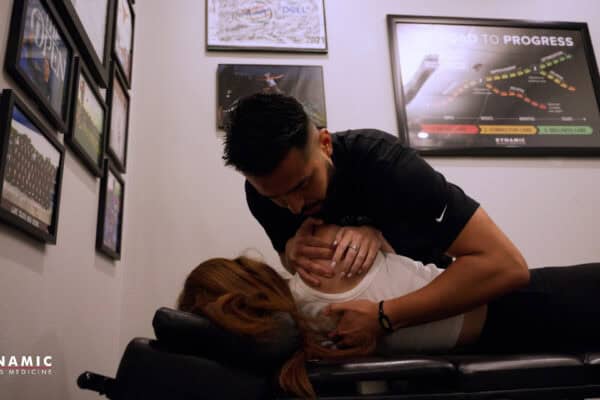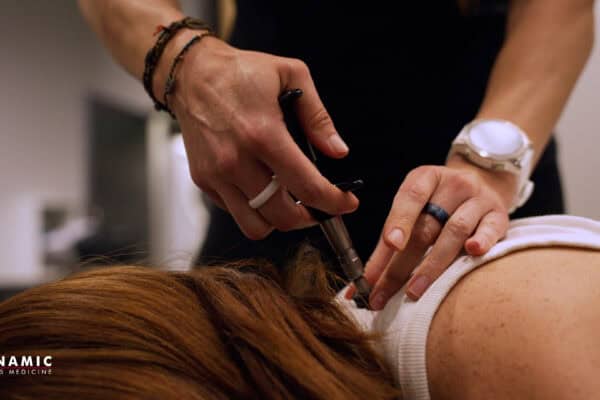
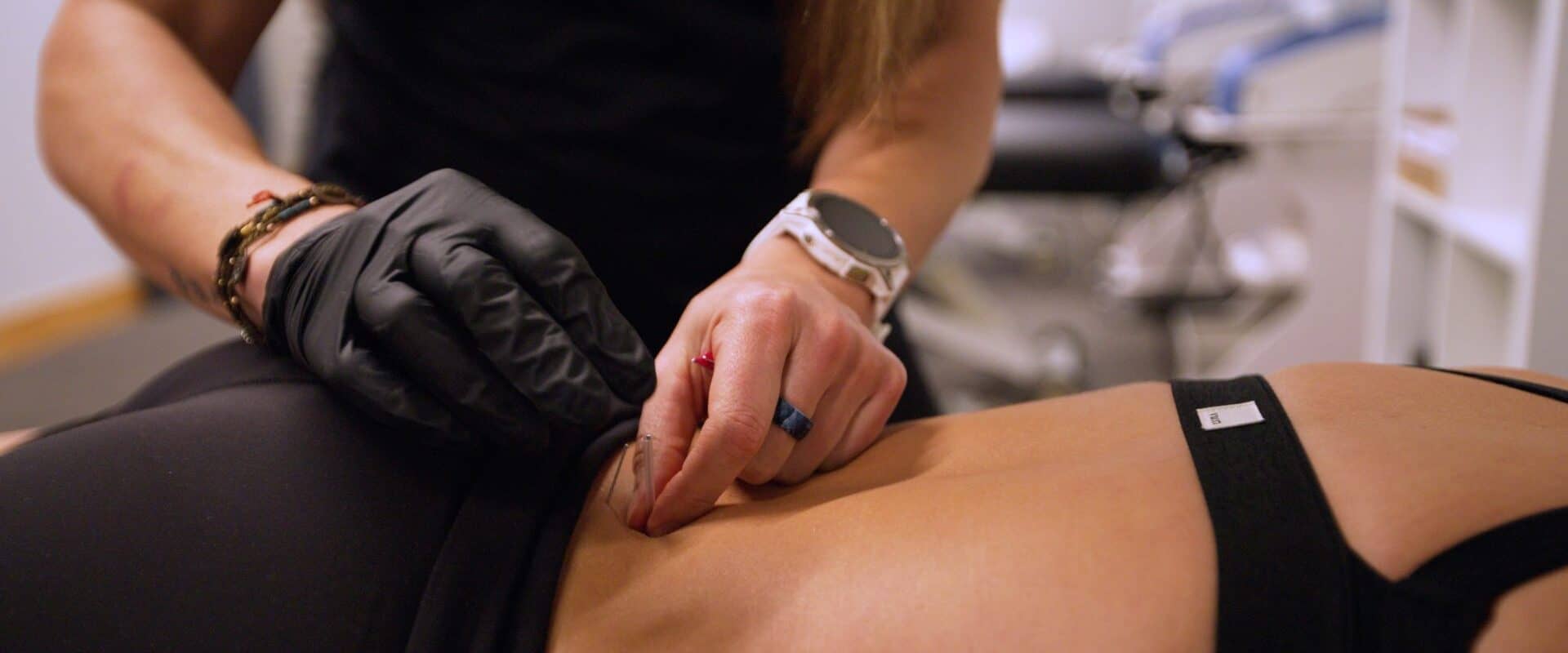

Medical professional performing sports injury treatment on a patient's lower back in a clinical setting, emphasizing sports medicine, injury recovery, and physical therapy.
Blog

How Dry Needling Works

Dr. Matt Lowe, DC CCSP By Dr. Matt Lowe, DC CCSP ·

Dry needling has become one of the most talked-about treatment options in musculoskeletal care. Some people swear it finally relieved pain they’d struggled with for years. Others are understandably hesitant after hearing about complications or seeing headlines involving injured athletes.

So what’s the truth?

The honest answer: dry needling does work for many conditions when performed correctly — but it is not a cure-all, and it should never be used casually or without proper training. At Dynamic Sports Medicine, we view dry needling as a powerful clinical tool, not a shortcut. When used thoughtfully and combined with movement-based care, it plays a meaningful role in recovery.

What Is Dry Needling?

Dry needling involves the use of thin, solid filiform needles inserted into specific areas of muscle known as trigger points. These trigger points are tight, irritable bands of tissue that often develop from overuse, injury, poor posture, or repetitive stress. The term “dry” simply means that nothing is injected. The needle itself creates the therapeutic effect.

If you’ve ever pressed on a knot in your shoulder or upper back and felt the pain shoot somewhere else, you’ve found a trigger point. They don’t always release with stretching, foam rolling, or massage — and that’s exactly where dry needling comes in.

How Dry Needling Works

Research suggests dry needling works through three main mechanisms:

  • Releasing trigger points through a local twitch response. When the needle reaches the right spot, the muscle fiber fires once and then relaxes — resetting tone in tissue that’s been stuck on “high.”
  • Improving local blood flow to support tissue recovery. Areas of chronic tightness often have restricted circulation, and the needle creates a controlled healing response that brings oxygen and nutrients in.
  • Modulating the nervous system to reduce pain sensitivity and abnormal muscle firing. In many chronic pain cases, the nervous system is stuck in a protective loop. Dry needling helps interrupt that cycle so movement can improve.

The goal isn’t just pain relief. It’s restoring normal muscle function so movement can improve.
Dry Needling vs. Acupuncture

Although both use thin needles, they are very different interventions.

  • Acupuncture is rooted in traditional Chinese medicine and focuses on energy meridians and qi flow. It’s used for systemic balance, wellness, and broader pain management.
  • Dry needling is based on Western anatomy, physiology, and biomechanics. It targets specific muscles and neuromuscular dysfunction, performed by physical therapists, chiropractors, and sports medicine clinicians with advanced anatomical training.

Same kind of needle. Different philosophy. Different application. Neither is “better” — they’re different tools for different purposes. If you’re dealing with specific muscle pain, trigger points, or a sports-related injury, dry needling is usually the right fit. If you’re seeking whole-body balance or an Eastern medicine approach, acupuncture is the better match.

What Conditions Can Dry Needling Help?

When used appropriately, dry needling may help with:

  • Neck and back pain
  • Shoulder and rotator cuff issues
  • Headaches, including cervicogenic (neck-related) headaches
  • Tennis and golfer’s elbow
  • Hip and gluteal pain
  • Sciatica and piriformis-related symptoms
  • Plantar fasciitis
  • Jaw and TMJ-related muscle pain

The common thread? These conditions often involve trigger points — tight, irritable bands of muscle that refer pain to other areas, limit range of motion, and don’t respond well to stretching alone.

That said, not every patient needs dry needling, and not every condition responds the same way. We assess first, then decide whether it fits your care plan.

Does Dry Needling Hurt?

Most people describe dry needling as uncomfortable — but tolerable.

  • Needle insertion itself is usually not painful.
  • When a trigger point is activated, you may feel a brief cramping or twitching sensation.
  • Mild soreness for 24–48 hours afterward is common.

We always explain what to expect beforehand and adjust technique based on patient comfort. If you’re nervous about it, tell us. We’d rather slow down and walk you through the first session than push through it.

What About the Risks?

This is where expertise matters.

Dry needling is safe when performed by properly trained clinicians who understand anatomy, depth, technique, and patient selection. Problems tend to arise when:

  • Needling is performed without sufficient anatomical knowledge
  • Depth and tissue layers are not respected
  • It’s used indiscriminately or aggressively
  • Screening and consent are inadequate

At Dynamic Sports Medicine, safety is non-negotiable. Our providers:

  • Use conservative, evidence-based techniques
  • Select muscles carefully based on examination
  • Avoid high-risk areas, including lung fields, unless clinically necessary and appropriate
  • Integrate dry needling only when it supports the overall plan

Dry needling should never be a “one-size-fits-all” treatment. It’s also not appropriate for everyone. We may avoid or modify dry needling for people with bleeding disorders, active infection or open wounds near the area, certain medical conditions affecting healing or sensation, pregnancy in specific regions, or significant needle anxiety. Each case requires individual assessment.

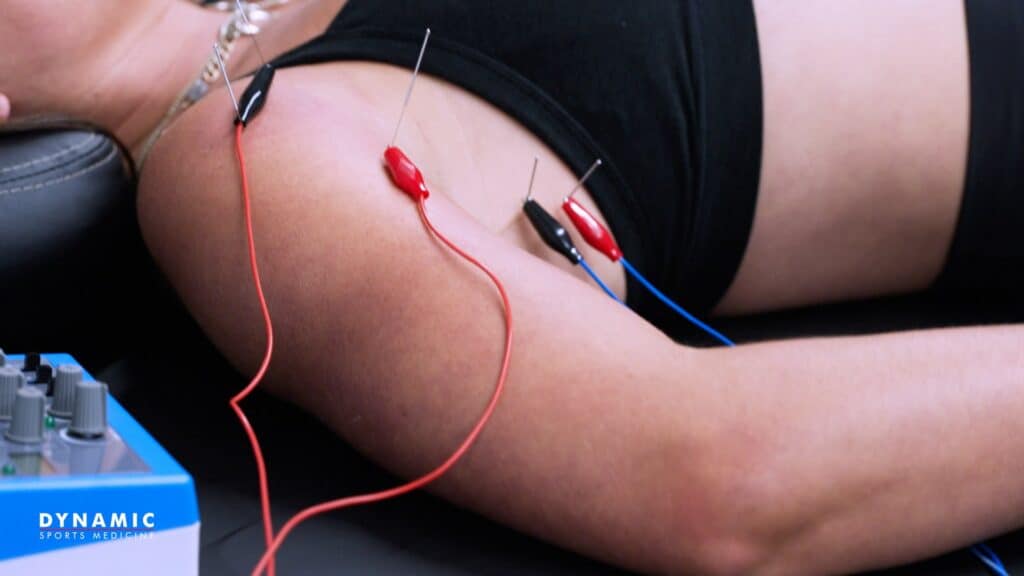
Electrotherapy treatment for muscle recovery and pain relief at Dynamic Sports Medicine.

Why Dry Needling Works Best as Part of a Plan

This is the most important point in the entire conversation.

Dry needling does not fix the root cause by itself. What it does is:

  • Reduce pain
  • Improve muscle activation
  • Create a window where movement improves

But lasting results come from what happens next. That’s why we combine dry needling with sports chiropractic, myofascial release, corrective exercise, strength and endurance training, mobility work, and postural and movement retraining.

At DSM, we often combine dry needling with low-level electrical stimulation to enhance neuromuscular response.

Think of dry needling as removing the handbrake — not driving the car. It opens the door for the rehab and training that rebuilds your capacity. If you only get needled and never address the underlying movement pattern, the trigger points come back. That’s not the fault of the needle. That’s the nature of the tissue.

How Many Sessions Are Needed?

Many patients notice improvement after the first session. However:

  • 3–6 sessions are often needed for longer-term results
  • Frequency depends on the condition, chronicity, and overall plan
  • We reassess regularly to ensure it’s adding value

If dry needling isn’t helping, we don’t keep doing it. Our job is to figure out what your body needs — not to default to one tool for every problem.

The Bottom Line

Yes — dry needling works when:

  • It’s used for the right reasons
  • Performed by properly trained clinicians
  • Integrated into a comprehensive treatment plan
  • Applied with precision and restraint

It’s not magic (although many of our patients may say otherwise), and it’s not for everyone. But when used thoughtfully, it can be a valuable tool in helping people move better, feel better, and recover more efficiently.

Our team treats people across Texas, including Downtown Austin, Cedar Park, Georgetown, Westlake Hills, Bee Cave, South Austin, Dallas, Irving, Plano, Southlake, McKinney, West University, and Royal Oaks. If you’ve been wondering whether dry needling could help with what you’re dealing with, the only way to know is to be evaluated.

Dry Needling FAQ

Yes, when it’s used for the right conditions and performed by a properly trained clinician. Research and clinical experience support its use for muscle pain, trigger points, and certain neuromuscular conditions. The catch is that it works best as part of a comprehensive plan, not as a standalone treatment.

No. Acupuncture is based on traditional Chinese medicine and energy meridians. Dry needling is based on Western anatomy and targets specific muscle trigger points. Same kind of needle, very different philosophies and goals.

Most people describe it as uncomfortable but tolerable. The needle insertion is usually not painful, but when a trigger point is activated you may feel a brief cramp or twitch. Mild soreness for 24 to 48 hours afterward is normal.

Many people notice improvement after the first session, but 3 to 6 sessions are often needed for longer-term results. Frequency depends on your condition, how chronic it is, and your overall plan. If it isn’t helping, we don’t keep doing it.

Dry needling may not be appropriate for people with bleeding disorders, active infection or open wounds near the area, compromised healing or sensation, pregnancy in specific regions, or significant needle anxiety. Every case requires individual assessment.

Dry needling is most useful for conditions involving muscle tension or trigger points: neck and back pain, shoulder pain, certain headaches (especially cervicogenic), tennis and golfer’s elbow, hip and glute pain, sciatica-related muscle tension, plantar fasciitis, and TMJ-related muscle pain.

Wondering if dry needling could help?

We assess first, then decide if it fits. If dry needling is the right tool for what you're dealing with, we'll explain why. If it isn't, we'll choose a better option.

Book an Appointment

Learn more about our full range of sports recovery services.

Learn More
Aetna Humana Blue Cross Blue Shield Ambetter Cigna