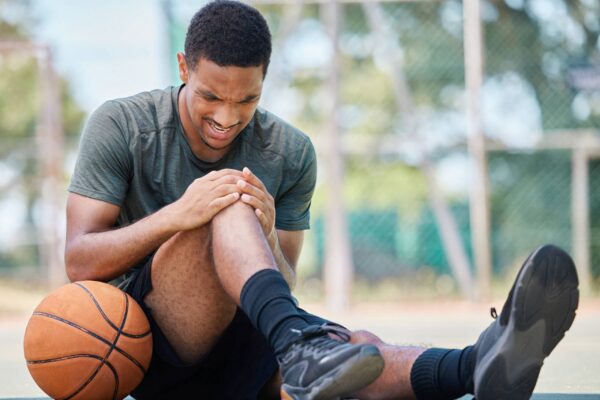

Soccer asks a lot of a young body. Sprinting, cutting, jumping, kicking, and contact — sometimes all in the same play. That mix gives soccer one of the widest injury profiles in youth sports, touching ankles, knees, hips, and heads in different ways.
If your kid plays soccer, you’re not tracking one injury risk. You’re tracking several at once, from a rolled ankle in warmups to a knee injury in the second half of a tournament final. Here’s a realistic map of what shows up across a season, and how to tell a scare from something that needs real attention.
Why Soccer’s Injury Profile Is So Broad
Soccer combines the sprint-and-cut demands of track with the contact of a collision sport and the repetitive strain of a kicking motion. Ankles absorb uneven turf and sudden direction changes. Knees take the load when a planted foot doesn’t turn with the rest of the body. Hips and groins fire hundreds of times a game to strike the ball. Heads and necks are exposed every time two players go up for the same ball.
No single body part carries the risk in soccer. That’s why a real evaluation looks at the whole athlete, not just the joint that hurts today.

Ankle Sprains and Why They Keep Coming Back
Ankle sprains are the most common injury in soccer, and for good reason. A cleat catches the turf, a foot rolls on an opponent’s, or a landing goes sideways instead of straight down. Most sprains stretch or tear the ligaments on the outside of the ankle.
The bigger problem is what happens after the swelling goes down. A sprained ankle loses some of its built-in balance sense, the nerve feedback that tells the brain where the foot is in space. If that doesn’t get retrained, the ankle stays loose and rolls again, often worse the second time. Rest alone doesn’t fix instability. Rebuilding strength and balance does.
Our team sees this cycle constantly across our 14 locations: athletes who treated a first sprain as no big deal and ended up with a third.
ACL Tears From Cutting and Pivoting
The ACL (anterior cruciate ligament) sits deep in the knee and keeps the shin bone from sliding forward under the thigh bone. It’s what lets an athlete plant, cut, and change direction without the knee giving way.
Most ACL tears in soccer happen without any contact at all. An athlete plants to cut, the knee twists inward, and the ligament gives. Athletes often describe a pop, followed by swelling and a knee that feels like it can’t be trusted. Female athletes are diagnosed with ACL tears at a higher rate than male athletes, likely from a combination of movement mechanics, strength patterns, and hormonal factors — which is why prevention training matters more for some athletes than others.
An ACL tear isn’t always a season-ender if it’s caught and managed early. Waiting on a knee that keeps buckling usually makes the eventual recovery longer, not shorter.
Groin and Hip Strains From Repetitive Kicking
Kicking a ball hundreds of times a practice puts constant strain on the adductor muscles — the group that pulls the leg back toward the midline. Unlike an ankle sprain or an ACL tear, groin and hip strains rarely come from one dramatic moment. They build slowly: a little tightness after practice, then soreness that lingers into the next day, then a strain that shows up mid-sprint.
Because there’s no clear moment of injury, these strains get ignored more than they should. An athlete plays through tightness for weeks, and what would have been a short recovery turns into a nagging injury that flares every time they push pace.
Concussions From Collisions and Heading
Head injuries in soccer come from two main sources: collisions with other players, goalposts, or the ground, and repeated heading of the ball. Younger athletes are more vulnerable here — their necks haven’t built the strength to stabilize the head the way an adult’s has, which means more force transfers straight to the brain on impact.
Watch for headache, dizziness, confusion, sensitivity to light, or a kid who just doesn’t seem right after a hard hit. Any suspected concussion needs a real evaluation before an athlete steps back on the field, not a sideline gut check.
Building a Season That Doesn’t Break Kids Down
You can’t eliminate soccer’s injury risk, but you can stack the odds in your kid’s favor:
- Build in real warmups. This means dynamic stretching and movement prep, not a lap and some toe touches.
- Add strength and stability work for the ankles, hips, and knees during the season, not just the offseason.
- Manage the calendar. Back-to-back tournaments with no recovery window are where overuse injuries pile up.
- Treat lingering soreness as information, not weakness. Pain that sticks around past a few days deserves a look
Most of soccer’s injuries are predictable, which means most of them are manageable if you catch them early. If your athlete is dealing with an ankle that won’t settle down, a knee that doesn’t feel right, or a hit to the head that’s still bothering them days later, get it looked at before the next game, not after.